What Small-Batch Roasting Means at Pine Flat
You will often see the phrase "small batch roasted" on coffee bags and roastery websites, but there is no universal batch size behind it.
Small batch is not a quality grade, and smaller does not automatically mean better.
At Pine Flat, it describes a deliberately small production model: we wait for an order, roast the coffee, then pack and ship it shortly afterward.
The benefit is flexibility and fresh inventory. The quality still comes from the coffee, a profile suited to the roaster, consistent execution, and what we taste in the cup.
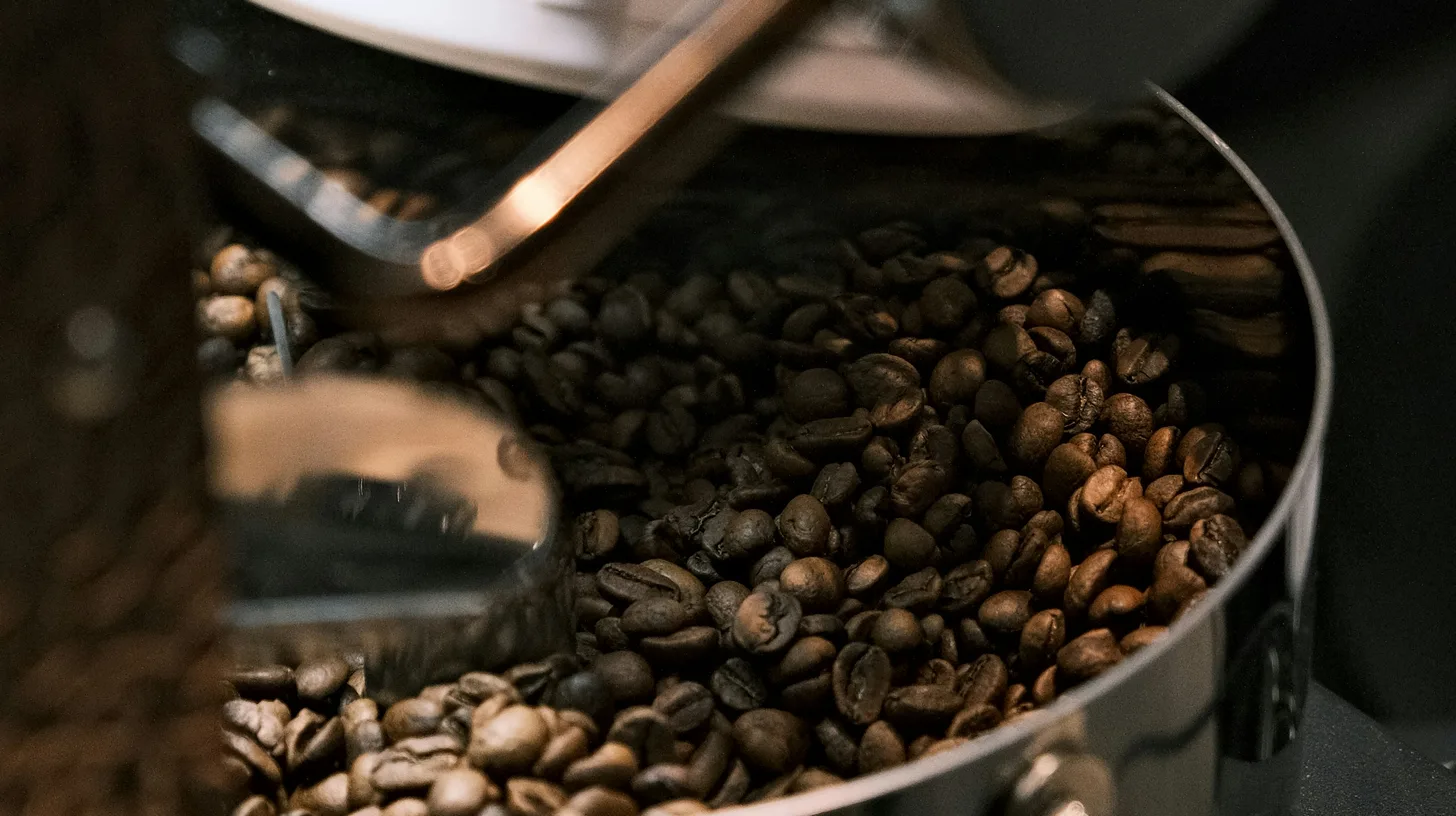
There is no magic batch size
Every roaster has a working range. A load that is too large can overwhelm the machine, while a load that is too small can make heat response and temperature readings less stable.
The useful batch size is the one that suits the equipment and can be repeated reliably.
Large production roasters can be highly precise. A small roaster still has to be understood, calibrated, and operated carefully.
What batch size changes
Changing the amount of coffee in a roaster changes its thermal load and how the batch responds to heat and airflow.
That is why a profile developed for one batch size cannot simply be copied to a very different load.
For any chosen batch size, the important work is repeatability:
- use a load suited to the machine
- follow how the coffee responds
- record the roast consistently
- taste the result and refine when needed
One common myth
Many people assume smaller batches automatically make better coffee. In reality, batch size is only one production choice. Quality depends on the green coffee, the equipment, the roast profile, repeatable execution, and tasting the result.
Why it fits Pine Flat
Our scale lets us roast in response to the orders we actually receive instead of building a large inventory of finished coffee.
That keeps the production cycle simple: order, roast, pack, and ship.
It also gives us room to work with coffees that may be available in modest or seasonal lots without needing to force every coffee into a high-volume production schedule.
Fresh does not mean unrested
Coffee often benefits from a short rest after roasting as carbon dioxide begins to escape.
Because we roast after receiving the order and ship shortly afterward, the time in transit overlaps with that early resting period.
The aim is for the coffee to reach you around its preferred rest window: freshly roasted, settled enough to brew, and ready to enjoy.
What the phrase means on our bag
When Pine Flat says small batch, we are not claiming that size alone makes coffee superior.
We mean that the business is intentionally scaled around roasting after an order, keeping finished inventory low, and staying close to each production run.
Small batch is not the reason a coffee tastes good by itself.
For Pine Flat, it is the scale that lets us roast after you order and send the coffee so it reaches you around its preferred rest window.
Roasted after you order
We roast after receiving your order, then pack and ship shortly afterward so the coffee can arrive rested and ready to brew.
Continue learning
Frequently asked questions
- What is small batch roasting?
- There is no universal definition. At Pine Flat, it means roasting in quantities suited to our equipment after an order is received rather than holding a large inventory of roasted coffee.
- Why does batch size matter in coffee roasting?
- Batch size changes the thermal load and how a coffee responds to heat and airflow, so each load needs a profile suited to the machine.
- Does small batch roasting make coffee better?
- Not automatically. Large and small roasters can both make excellent coffee. Quality depends on sourcing, equipment, profiling, execution, freshness, and evaluation.
- Why does Pine Flat Roastery roast in small batches?
- It lets us roast after receiving an order, keep finished inventory low, and ship the coffee while its early rest is already underway.