What Roasting at 4,000 Feet Changes — and What It Doesn't
People sometimes ask what "Handcrafted at Elevation" actually means.
Part of the answer is simply where we roast.
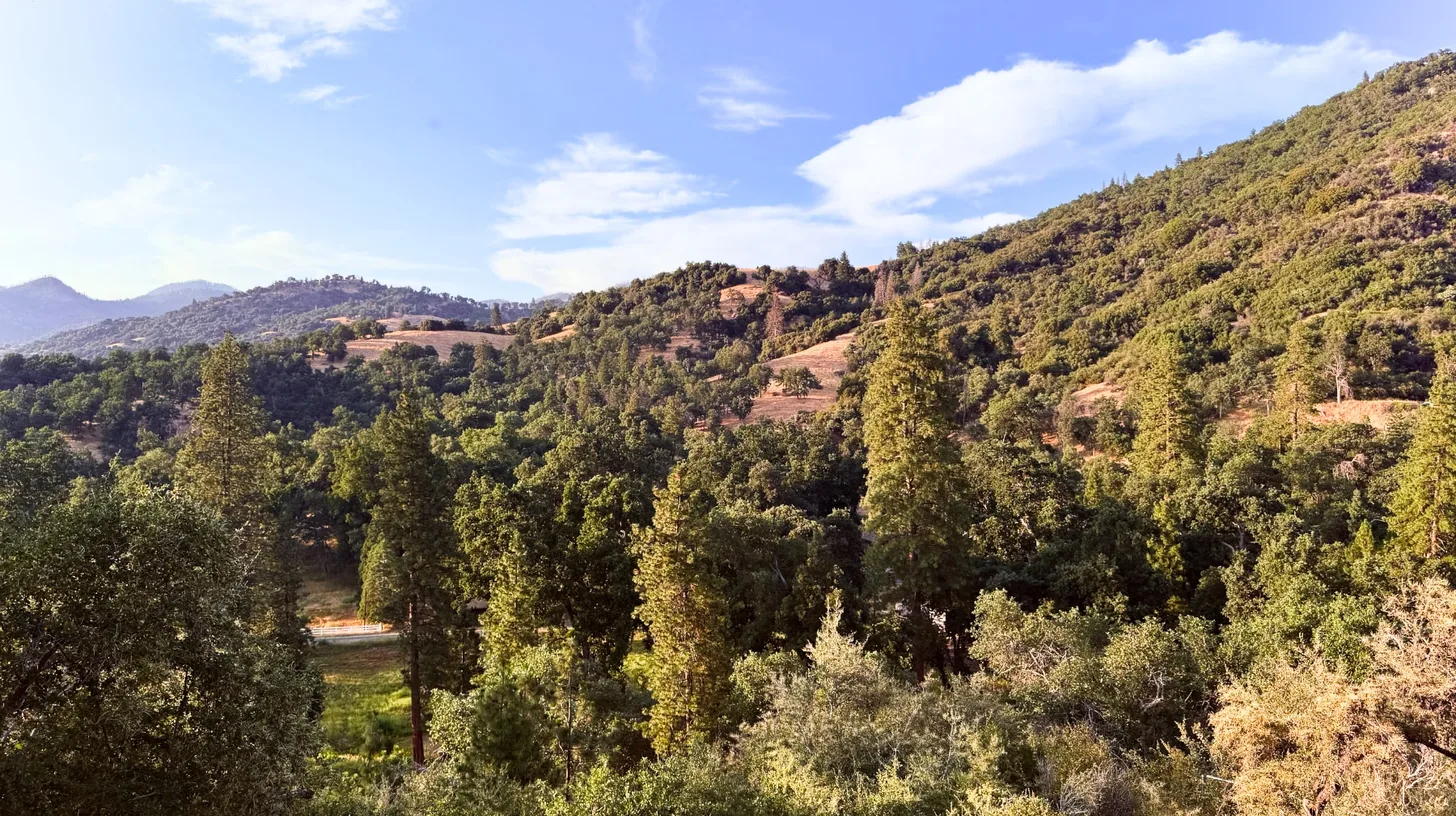
Pine Flat Roastery sits at about 4,000 feet above sea level in the Sierra Nevada. Air pressure is lower here and the air is less dense than it is at sea level.
At 4,000 feet, water boils around 204–205°F instead of 212°F; that is an easy way to see the pressure difference. A coffee bean inside a hot roaster is not an open pot of water, however. The practical roasting effect depends on the machine, its heat source, its fan, and how the whole installation moves air.
What elevation can change
Roasting equipment moves heat through a combination of hot air, contact with the machine, and radiant energy.
Lower-density air can change how a particular fan and burner system behaves. The same control setting does not necessarily produce the same mass of airflow or heat transfer in every installation.
How much that matters depends on the roaster. Elevation is one variable alongside equipment design, batch size, fuel, ambient temperature, and the green coffee itself.
What elevation does not do
Elevation does not add a flavor to coffee, and roasting in the mountains does not automatically make a batch better.
A well-operated roaster at sea level can produce exceptional coffee. A poorly developed roast at elevation is still a poorly developed roast.
The advantage is not altitude itself. The work is learning how the coffee and the equipment behave where they are actually used.
Profiles belong to a specific setup
A roast profile is more than a list of temperatures and times. It belongs to a particular machine, batch, coffee, and installation.
At Pine Flat, we develop profiles on the roaster in the conditions where we will repeat them. We watch how a coffee responds, evaluate the cup, and refine the profile here rather than assuming a recipe copied from somewhere else will behave identically.
That local calibration is the meaningful part of roasting at 4,000 feet.
Why we still put elevation on the bag
Pine Flat is not a marketing backdrop. It is where the roastery operates and where each order is roasted.
"Handcrafted at Elevation" describes the place and the practice: a small mountain roastery learning its equipment and developing coffee for the conditions here.
It is a statement of origin for our work, not a promise that thin air creates better flavor on its own.
One common myth
Some people assume high-elevation roasting automatically makes coffee taste better. In reality, elevation is a condition to calibrate for, not a flavor ingredient. Quality still depends on the coffee, the equipment, the roast profile, repeatable execution, and evaluation in the cup.
At 4,000 feet, the air is different. The standard for the cup is not.
Learning to roast consistently in this place is what “Handcrafted at Elevation” means to us.
Taste careful roast development.
Explore coffees developed and roasted after you order here in Pine Flat.
Continue learning
Frequently asked questions
- Why does elevation matter for coffee roasting?
- Elevation changes air pressure and density. Depending on the roaster, that can affect how its fan, burner, and airflow behave, so the setup must be calibrated where it operates.
- What elevation is Pine Flat Roastery?
- Pine Flat Roastery roasts at about 4,000 feet in the Sierra Nevada mountains of California.
- Can the same roast profile work anywhere?
- Not exactly. Profiles depend on the coffee, equipment, batch size, installation, and local conditions. Settings that work on one machine are a starting point, not a universal recipe.
- Does high-elevation roasting make coffee better?
- No. Elevation does not add quality by itself. It is one of the conditions a roaster accounts for while developing and repeating a profile.