When Should You Change Your Brewing Temperature?
A temperature-controlled kettle gives you a very precise number. It does not tell you whether that number is the reason a cup tastes good.
Temperature is useful once your basic recipe is steady. Think of it as another way to tune extraction, rather than a secret setting that unlocks every coffee.
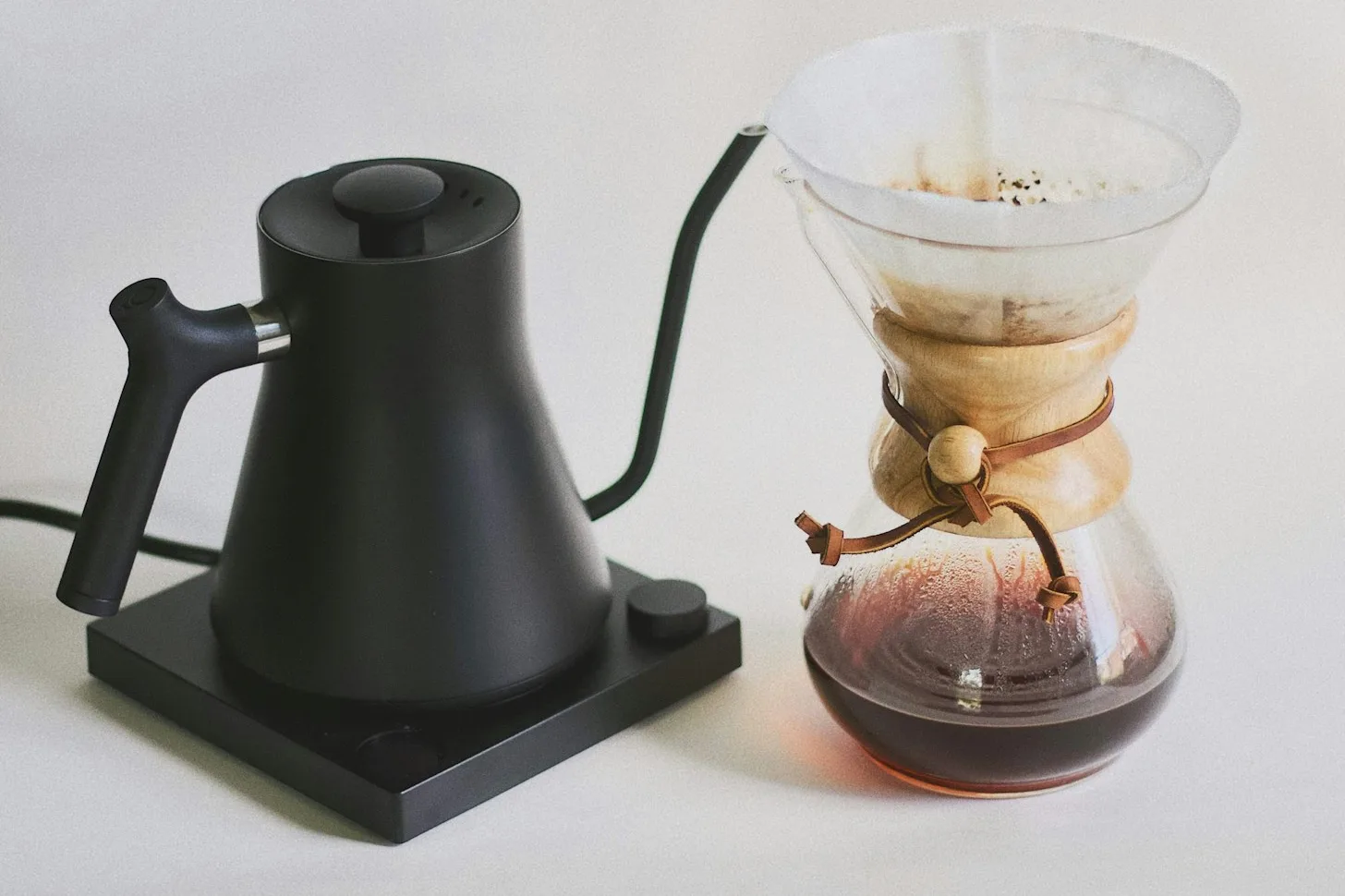
The kettle is not the coffee bed
Water loses heat as it moves into the brewer and mixes with room-temperature grounds. A cold ceramic dripper, a small batch, and a long pause between pours can all change the temperature the coffee actually experiences.
Before comparing settings, warm the brewer in the same way each time. A repeatable setup matters more than treating the kettle display as a measurement of the whole brew.
A starting point, then a question
For many hot filter brews, water in the low-to-mid 90s Celsius is a useful starting point. Your established recipe may specify something else; begin there if it already works.
If a darker roast feels harsh despite a sensible grind and good wetting, a slightly cooler brew is worth testing. If a light roast stays sharp and hollow, somewhat hotter water is one possible adjustment. Neither response is guaranteed by roast color alone.
Why there is no universal magic degree
UC Davis research reported by the SCA found little sensory effect from brewing temperature within the studied range when strength and extraction were held fixed. That last condition matters.
At home, changing kettle temperature without other adjustments may also change extraction. The research does not mean temperature never matters, or that every temperature gives the same result. It suggests that the resulting brew matters more than an isolated setting.
Run a small temperature comparison
- Choose a coffee and a recipe you can repeat. Record the dose, water, grind, and pouring or steeping routine.
- Brew at your usual temperature, then make a second brew about 3°C cooler or hotter, staying within your equipment's limits.
- Preheat both setups the same way. Keep the other recipe choices fixed.
- Taste both when they reach a similar comfortable drinking temperature. Record which is sweeter, clearer, or more drying, then repeat the comparison another day.
One common myth
People sometimes say boiling water automatically burns coffee grounds. In reality, brewing heat is very different from roasting heat. Hotter water may make an unsuitable recipe taste harsh, but the useful response is to tune extraction rather than assume the coffee has been scorched.
No adjustable kettle is required
You can compare brewing soon after boiling with a consistent short wait, using the same kettle and water amount. You will not know the exact temperature difference, but you can still test a repeatable routine.
At higher elevations, water boils at a lower temperature. A recipe asking for a hotter number than local boiling is not something to chase. Keep the water hot and consider grind or contact time if the cup needs more development.
Use temperature to answer one question about your cup. Precision becomes useful when the comparison is fair.
Ready to brew?
Find a coffee to try in your next brew.
Continue learning
Frequently asked questions
- Do lighter roasts always need boiling water?
- No. Hotter water can help some recipes, but grind, contact time, and brewer heat loss also matter. Use taste and a repeatable comparison to decide.
- Why does my kettle setting differ from the slurry temperature?
- The brewer, grounds, and air absorb heat during pouring. The mixture in the brewer can therefore be cooler than the water measured inside the kettle.
- Can I test temperature without a temperature-controlled kettle?
- Yes. Compare consistent waits after boiling with the same kettle and water amount. Treat the result as a practical routine, not an exact temperature measurement.