Stirring and Swirling: The Variable You May Be Missing
You weigh the coffee and water, keep the grinder in the same place, and still get a different cup. The movement of your spoon, kettle, or brewer may be the missing variable.
Agitation simply means movement in the coffee-and-water mixture. You do not need a new technique for every brew. You need to know which movements you already make.
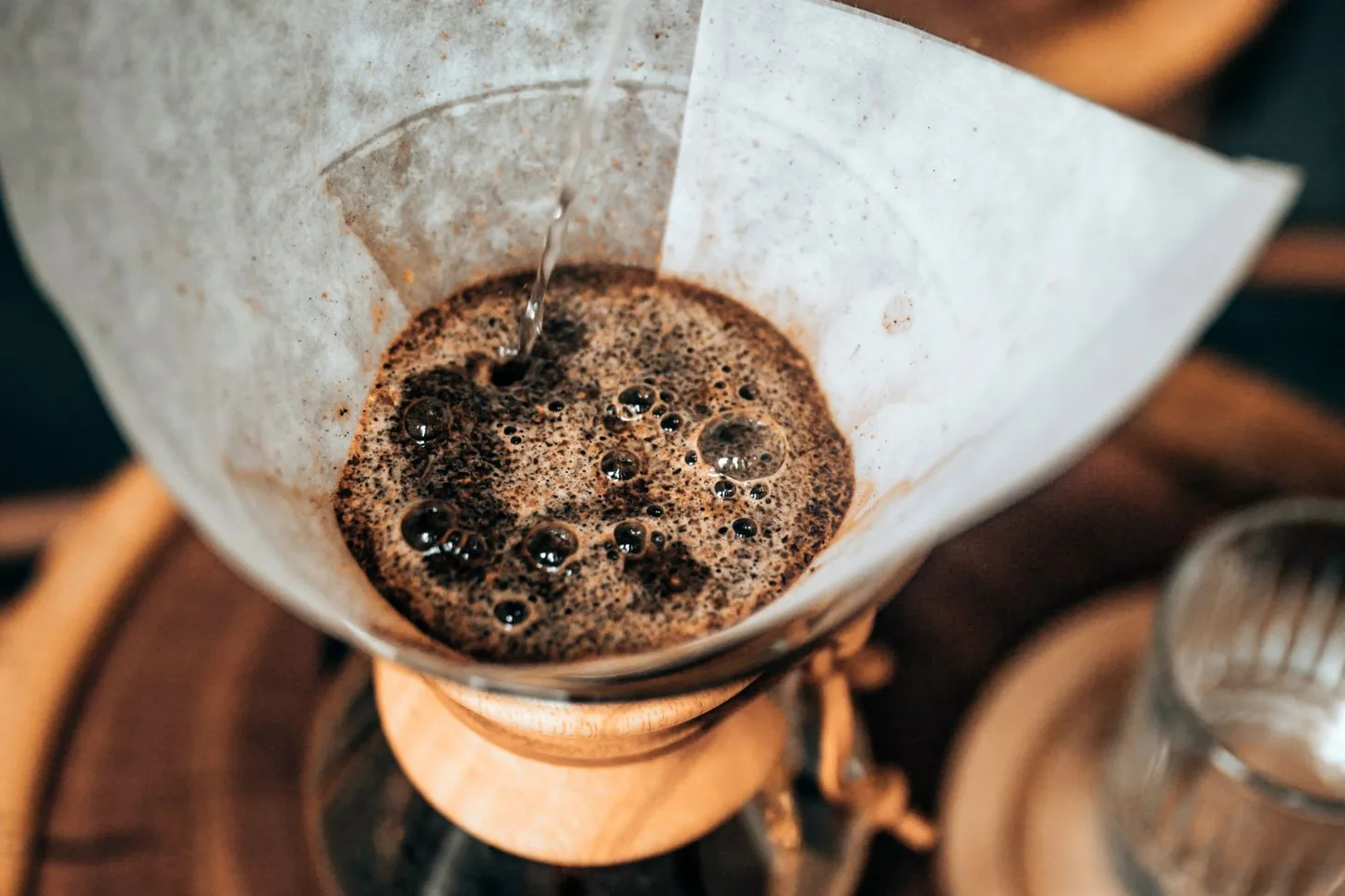
Movement is part of extraction
Stirring brings water into contact with grounds and helps replace liquid near their surfaces. Pouring and swirling can do some of the same work. A dry pocket at the start and a fully wet bed are different brewing conditions.
The useful question is not whether agitation is good or bad. It is whether the movement solves a problem and can be repeated.
More movement can change drainage
In a paper-filtered brew, extra movement can redistribute fine particles and sometimes slow the drawdown. A vigorous swirl may change more than the shape of the bed.
In a French press, a late stir can bring settled grounds back into suspension. That is a different problem: the beverage becomes muddier even though there is no paper filter to clog.
Describe your normal brew first
“A little swirl” is surprisingly hard to repeat. Write something more concrete: one gentle circle after the initial wetting, or two shallow spoon strokes to remove dry pockets.
For pouring, keep the kettle at a similar height and use a similar flow. If one brew is a quiet stream and the next is a high, splashing pour, you changed agitation even without touching a spoon.
Try one controlled change
- Brew your usual recipe and record your normal stirring, pouring, and swirling. Note both total time and taste.
- On the next brew, keep dose, grind, water, and temperature fixed. Change only one movement, such as omitting an extra final swirl.
- Compare sweetness, drying sensation, and the finish after both cups cool to a comfortable temperature.
- Repeat the better version on another day. A single fast or slow brew is not enough to establish a reliable improvement.
One common myth
It is tempting to believe that more stirring always extracts more good flavor. In reality, agitation also changes particle movement, drainage, and sediment. Enough movement to wet the coffee is useful; extra movement should earn its place through a better-tasting, repeatable cup.
Use the cup to decide
A flat bed is tidy, but it cannot tell you whether every particle extracted evenly. Likewise, a longer brew is not automatically more complete or more bitter.
If a small stir reliably prevents dry pockets and improves sweetness, keep it. If extra swirling only gives you a slow finish and a rough cup, simplify the routine. At home, a move you can repeat calmly is often more useful than an impressive-looking pour.
Before changing the grinder, notice what your hands are doing. Consistent movement makes the rest of the recipe easier to understand.
Ready to brew?
Find a coffee to try in your next brew.
Continue learning
Frequently asked questions
- Does swirling always make coffee bitter?
- No. Its effect depends on the brewer, coffee, grind, and intensity of the movement. Compare one small change while keeping the rest of the recipe steady.
- Should I stir a French press before pouring?
- A late stir can lift sediment back into the drink. Mix during brewing as needed, then allow a quiet settling period before serving gently.
- Is a flat coffee bed proof of even extraction?
- No. It shows the surface after drainage, not the path every bit of water took. Taste and repeatability are more useful checks than appearance alone.