A Sweeter, Less Muddy French Press
If your French press tastes heavy but somehow hollow, a coarser grind is not always the answer. Very large particles can leave flavor behind while the smallest particles still find their way through the screen.
The aim is a flavorful steep followed by a calm separation. You can keep the body you enjoy while leaving more of the loose sediment in the pot.
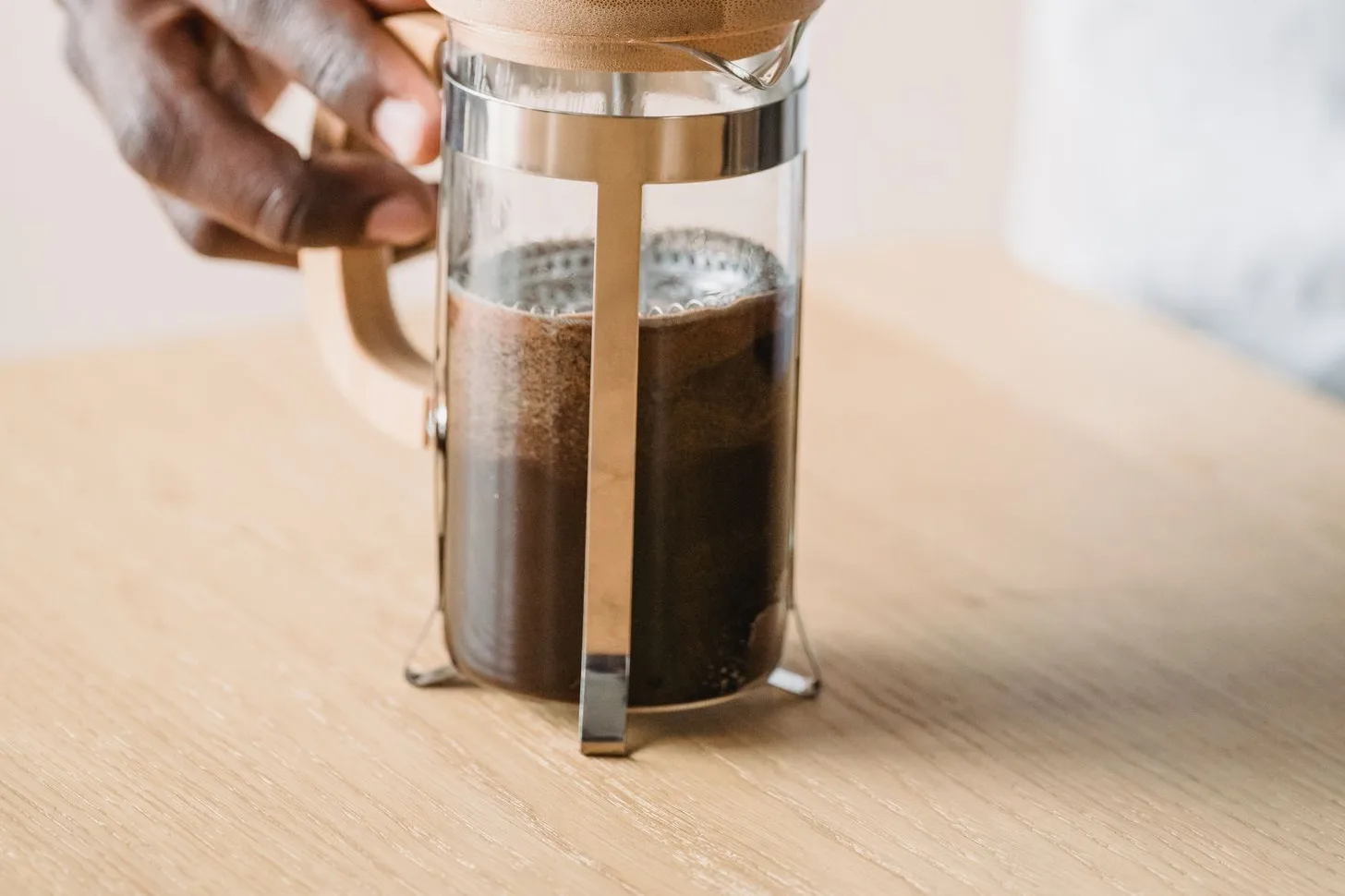
Begin with a measured pot
For a press with enough room, start with 30 g of coffee and 500 g of water. Use a medium-coarse grind rather than the largest pieces your grinder can produce. This is a starting recipe, not a requirement for every coffee.
Preheat the press with hot water and discard that water before adding grounds. Use freshly boiled water allowed to settle briefly; a darker roast may taste better with slightly cooler water. Keep your choice consistent for the first few brews.
Steep, settle, then pour
- Add 30 g of ground coffee to the empty, preheated press. Start a timer as you add 500 g of water, wetting all the grounds. Stay below the maker's maximum fill line.
- Give the surface a gentle stir to wet any dry pockets. Set the lid in place without pressing and leave it until about 4 minutes from the start.
- Gently break any floating crust with a spoon. If desired, skim off the floating foam and loose grounds, then let the pot settle for another 3 to 5 minutes.
- Lower the plunger slowly. Stop if it resists; never force a hot glass press. Pour gently into cups or a serving vessel, leaving the muddy final splash behind.
Why the pause helps
Stirring just before pouring suspends particles you were hoping to leave behind. The quiet pause gives them time to settle. Pressing hard at the end can disturb that layer again.
You will lose a little beverage with the sediment. That is a reasonable trade if you prefer a cleaner finish. The mesh cannot make the cup identical to paper-filtered coffee.
Change flavor separately from sediment
If the cup is thin and sharply sour, try a small step finer on the next brew while holding dose and time steady. If it is drying or harsh, try a small step coarser. These are test directions, not diagnoses that fit every coffee.
If flavor is pleasing but the cup is gritty, first change the handling: less late stirring, a slower plunge, and a gentler pour. Changing the grind and the pour together makes the result harder to understand.
One common myth
A common rule says French press requires the coarsest possible grind. In reality, very coarse grounds can make a weak, incomplete-tasting brew. A moderate grind, enough contact time, and gentle separation often give a fuller flavor without so much sediment.
The screen needs a reset too
Take the filter assembly apart as the manufacturer allows. Trapped grounds and old oil can spoil the next pot, even when the glass looks clean. Rinse thoroughly and let the parts dry.
For your next two pots, keep the recipe identical and change only the settling pause. Taste the last sip as well as the first. That is where the difference is often easiest to notice.
Let the coffee brew, then let it settle. The last part of a good French press is often about doing less.
Ready to brew?
Find a coffee to try in your next brew.
Continue learning
Frequently asked questions
- How much coffee should I use for 500 g of water?
- Start with 30 g of coffee and adjust to your preferred strength. Make sure your press has room for both water and grounds below its maximum fill line.
- Should I squeeze the grounds with the plunger?
- No. Lower it slowly and avoid forcing it against resistance. A hard plunge can disturb sediment and is unsafe with a hot glass press.
- Can I leave the second cup in the press?
- You can, but decanting after brewing gives you a more consistent serving. A separate insulated vessel is useful if you want the second cup later.