French Press, Pour-Over, or AeroPress?
You can brew the same coffee three ways and end up with three cups you would happily drink for different reasons.
Our V60 guide covers the pouring. This note steps back: when would a French press, a pour-over, or an AeroPress fit your day better? Start with the cup you want, then consider the work involved.
Start with texture
A French press steeps the grounds in water and separates them with a metal screen. Some oils and fine particles reach the cup, giving it a fuller, more textured feel. A little sediment is part of that experience.
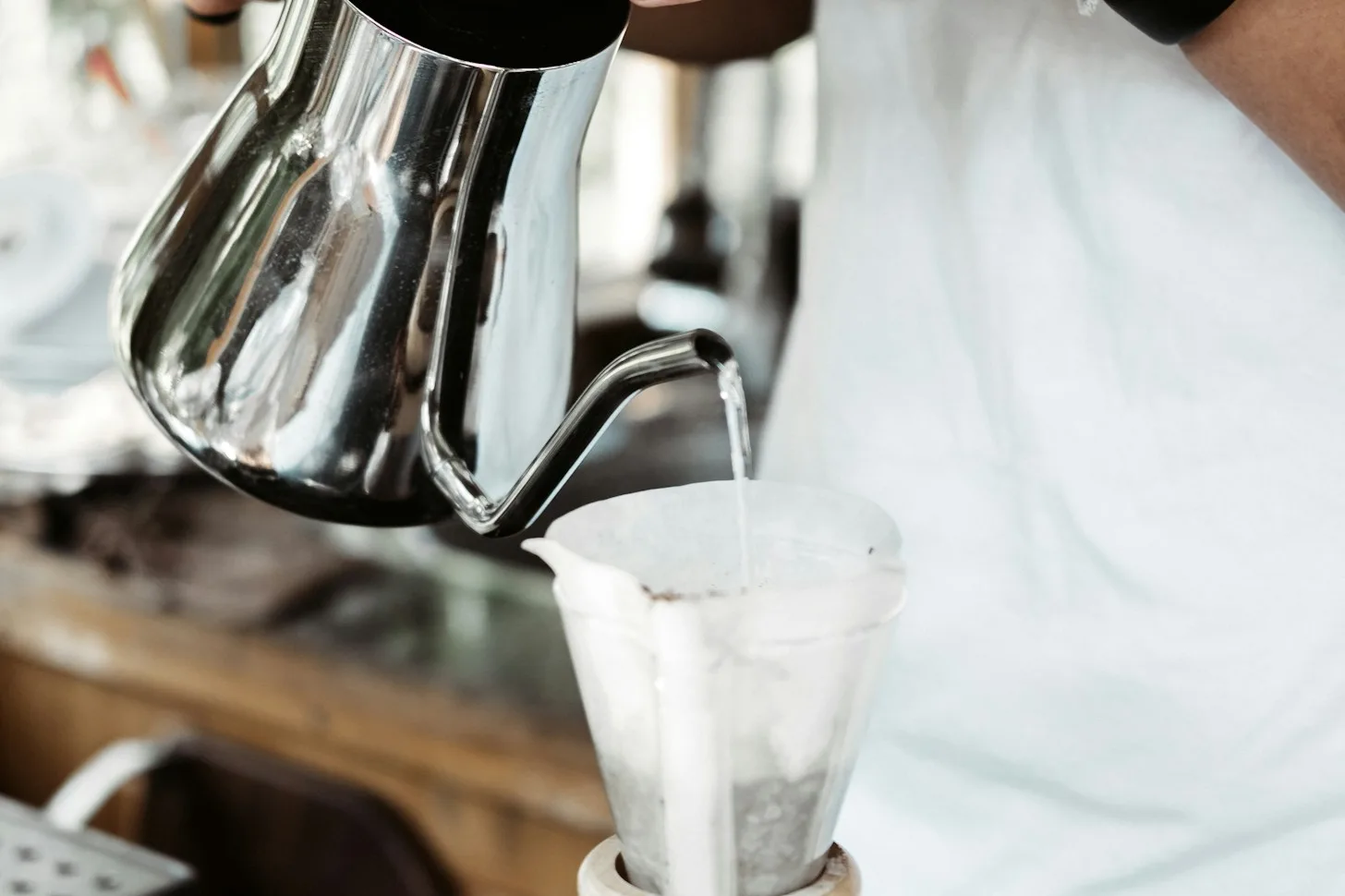
A paper-filtered pour-over lets fresh water pass through the coffee bed. Paper catches much of the suspended material, so individual flavors can feel easier to distinguish. Neither texture is a measure of quality.
Where the AeroPress fits
An AeroPress combines a short steep with a gentle press through a filter. With paper, it can produce a relatively clear cup; changing the recipe or filter changes that result. It is especially convenient for one person and quick cleanup.
Its concentrated recipes can be useful for a small milk drink, but the device does not reproduce espresso-machine pressure. Judge the drink on its own terms.
Match the brewer to the morning
- French press: useful when several people want coffee together and you can leave a pot to steep. Plan to decant it and rinse the screen afterward.
- Pour-over: useful when you enjoy an involved routine and a clear cup. It rewards a repeatable pour, and spent grounds lift out with the paper.
- AeroPress: useful for a single serving, limited counter space, and a quick reset. Use a sturdy cup and follow the instructions for your model.
Compare fairly before changing equipment
If you already own two brewers, use the same coffee and water for both. Choose a sensible recipe for each method; forcing every brewer to use an identical grind is not a fair comparison.
Taste the cups at a similar, comfortable temperature. First compare body and sediment. Then ask which cup makes you want another sip. A darker-looking brew is not automatically the stronger or better-extracted one.
One common myth
It is easy to assume pour-over is the most serious way to brew specialty coffee. In reality, immersion and paper-filtered brewing emphasize different qualities. A carefully brewed French press can be just as rewarding, and the best method is the one that gives you a cup and routine you enjoy.
A useful choice can change with the day
For a weekday, cleanup and serving size may matter more than an extra shade of flavor clarity. On a quiet weekend, the pouring itself may be part of the pleasure.
Write down three priorities: how many people you brew for, whether you like sediment, and how much attention you want to give the brew. Those answers are more useful than a universal ranking. If your current brewer fits them, there may be nothing to buy.
Choose a method for the mornings you have, not the routine someone else enjoys. A familiar coffee is a good place to start the comparison.
Ready to brew?
Find a coffee to try in your next brew.
Continue learning
Frequently asked questions
- Which method makes the strongest coffee?
- Strength depends on the recipe and any dilution, not just the brewer. Each method can make a stronger or lighter drink within its practical limits.
- Does a French press always make gritty coffee?
- Some fine sediment is normal with a metal screen. Letting the grounds settle and pouring gently can reduce how much reaches your cup.
- Is AeroPress coffee the same as espresso?
- No. It can brew a concentrate, but its pressure and extraction conditions differ from an espresso machine. It is useful as its own brewing method.