Blends vs Single Origin Coffee
Coffee is often described as either a blend or a single origin.
Both can be excellent.
The difference is not quality by itself. The difference is how the coffee is built and what the roaster wants it to express.
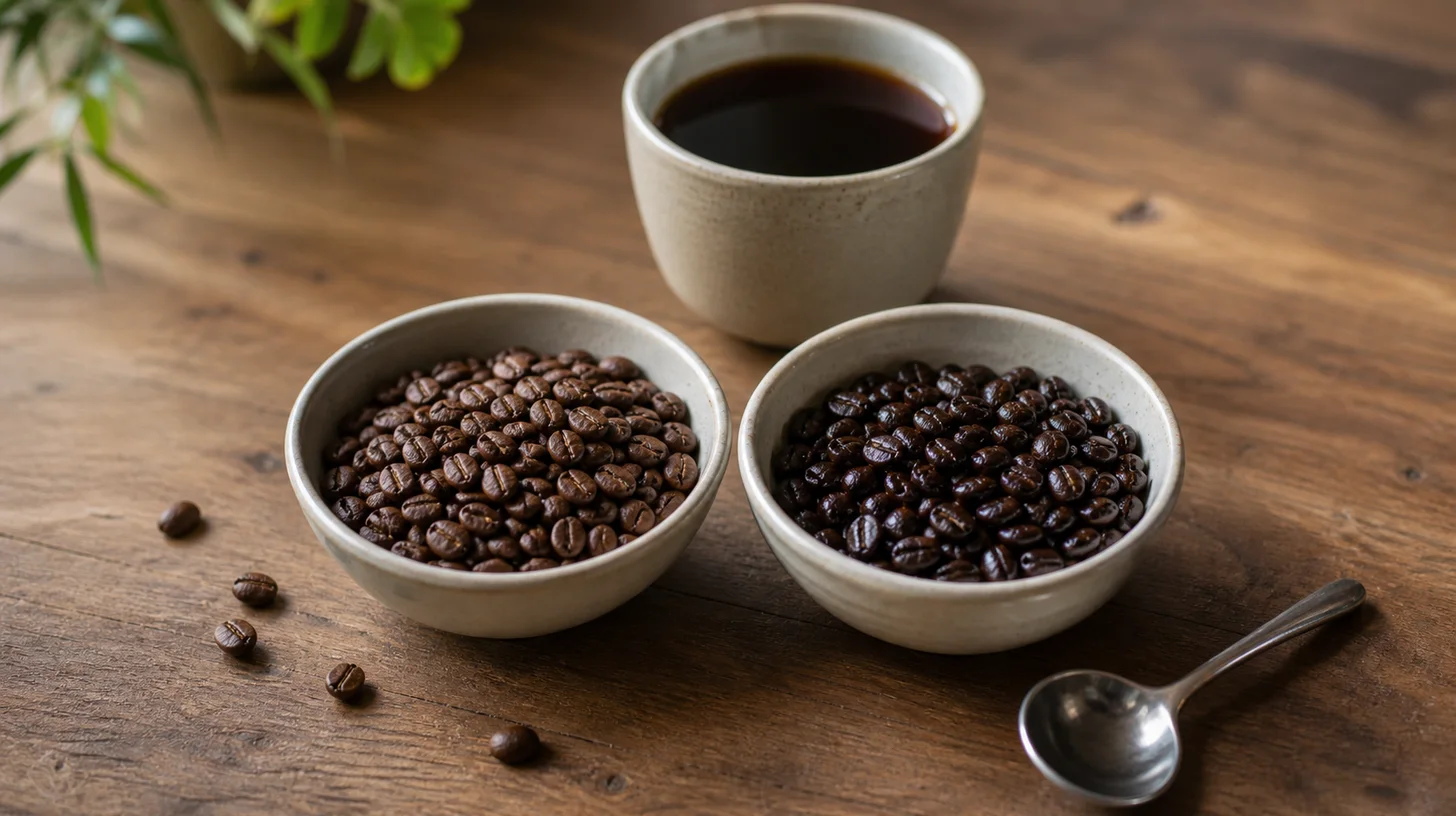
What single origin means
Single origin coffee comes from one defined place.
That may mean one country, one region, one cooperative, one farm, or even one specific lot.
The point is traceability. The coffee is meant to show the character of that place and harvest.
What a blend means
A blend combines coffees from more than one source.
Roasters build blends to create a specific flavor profile, improve consistency, or balance strengths from different coffees.
One component might add sweetness, another might add body, and another might add brightness or finish.
Why people like single origins
Single origins are often chosen for clarity and distinctiveness.
They can highlight a growing region, processing method, variety, or seasonal harvest.
If you enjoy tasting how coffees differ from place to place, single origins are a rewarding way to explore.
Why people like blends
Blends are often chosen for balance and reliability.
A good blend can be designed to taste familiar, sweet, and steady across different brew methods.
That makes blends especially useful for espresso, milk drinks, and everyday brewing.
Which is better for espresso
Both can work.
A blend may give espresso more consistency and a wider sweet spot when dialing in.
A single origin espresso can be more distinctive, but it may also be more sensitive to grind, dose, and extraction.
The right choice depends on whether you want reliability or a more specific expression of one coffee.
Seasonality matters
Coffee changes with harvest seasons.
Single origins may come and go as fresh lots arrive and sell through.
Blends can be adjusted over time to keep a familiar flavor profile even when individual components change.
One common myth
Many people assume single origin is always higher quality than a blend. In reality, a thoughtful blend can be made from excellent coffees, and a single origin can still be roasted or brewed poorly. Quality depends on sourcing, roasting, freshness, and preparation.
Where we stand
At Pine Flat Roastery, we value both approaches.
Single origins let us showcase clarity and place. Blends let us build comfort, balance, and consistency.
The best choice is the one that fits how you brew and what you want to taste.
If you want exploration, start with a single origin.
If you want a steady everyday cup, a blend may be exactly right.
There is no wrong side to choose when the coffee is fresh and roasted with care.
Explore what shapes flavor.
If you'd like to compare both styles, explore our current roasts.
Continue learning
Frequently asked questions
- Is single origin coffee better than a blend?
- Not automatically. Single origins highlight one place, while blends are built for balance or consistency. Either can be excellent.
- What does single origin coffee mean?
- Single origin means the coffee comes from one identifiable place, such as one country, region, farm, cooperative, or lot.
- Are coffee blends lower quality?
- No. A blend can be made from high-quality coffees. The important question is whether the coffees were chosen and roasted with care.
- Which is better for espresso, blend or single origin?
- Blends are often easier to keep balanced for espresso, but single origins can make expressive espresso when the roast and recipe fit the coffee.