How to Dial In Coffee at Home
Dialing in coffee sounds technical, but the idea is simple.
You brew, taste, adjust one variable, and brew again.
The goal is not perfection. The goal is a cup that tastes balanced, sweet, and enjoyable with the equipment you already have.
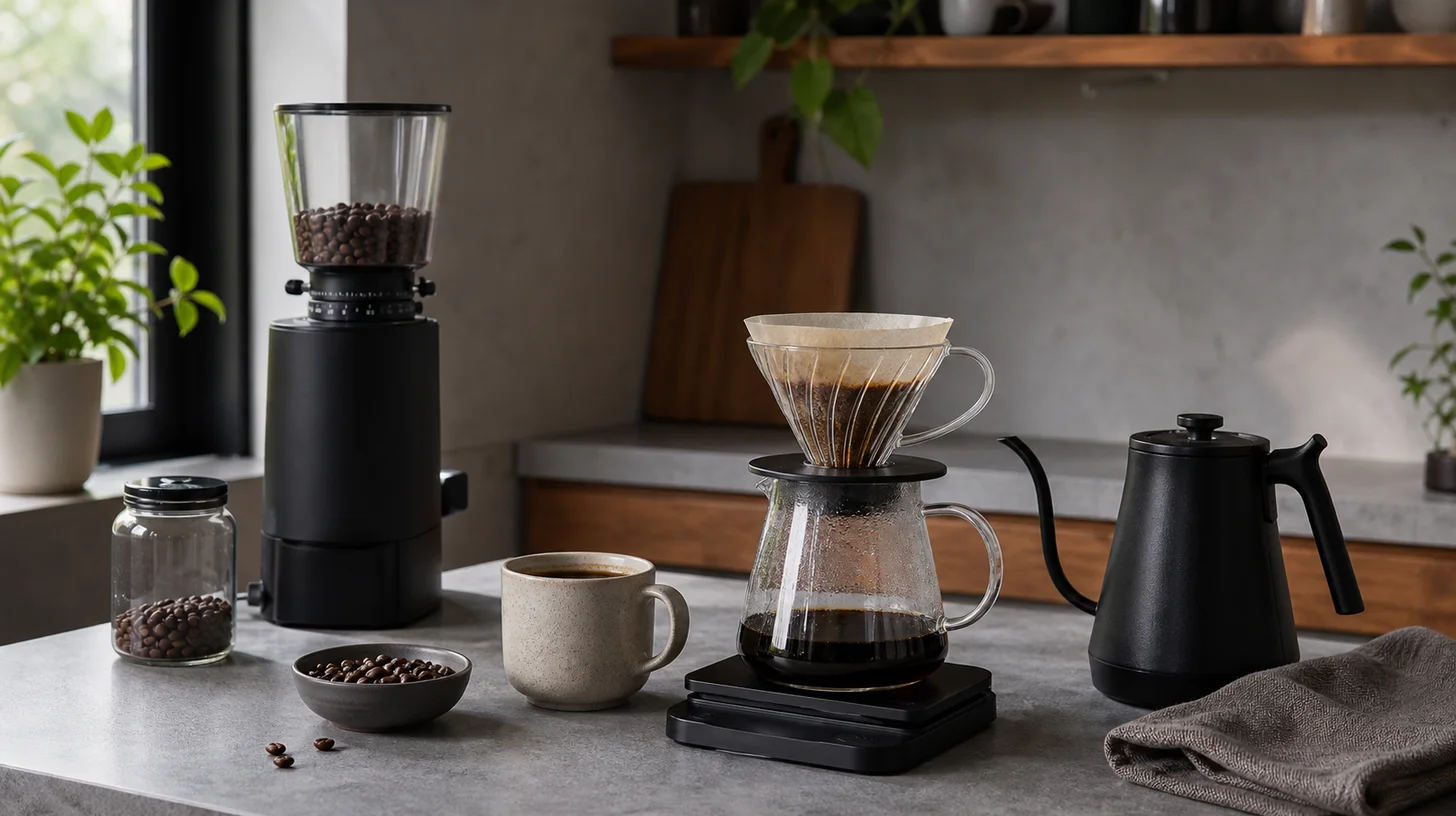
Start with one recipe
Before changing everything, choose a repeatable starting point.
Use the same amount of coffee, the same amount of water, the same brew method, and the same water temperature each time.
Once the recipe is stable, adjustments become much easier to understand.
Taste clues are not universal rules
Sour often points toward low or uneven extraction, while dry bitterness often points toward high or uneven extraction. But roast style, water, grinder consistency, and personal preference can create similar impressions.
Use the suggestions below as small experiments. Also watch brew behavior: a pour-over that races through or stalls gives you information that taste alone may not.
If coffee tastes sour or thin
Sour, sharp, or hollow coffee is often under-extracted.
That means the water did not pull enough sweetness and soluble flavor from the grounds.
Try one change at a time:
- grind slightly finer
- extend brew time
- use slightly hotter water if the coffee and roast respond well to it
- for pour-over, check for a brew that drains unusually fast or water that bypasses the coffee bed
If coffee tastes bitter or dry
Bitter, harsh, or drying coffee can point to too much extraction, but uneven flow and channeling can produce rough flavors too.
The roast itself may also carry intentional bitterness, so compare the result with what that coffee is meant to taste like.
Try one change at a time:
- grind slightly coarser
- shorten brew time
- use slightly cooler water if the roast tastes harsh at the current temperature
- avoid over-agitating the coffee bed
If coffee tastes weak
Weak describes concentration, while sour or hollow describes extraction. A cup can be weak but evenly extracted, or strong and under-extracted.
If it tastes weak and sour, adjust extraction first by grinding finer or brewing longer.
If it tastes balanced but too light, use a little more coffee or a little less water.
If coffee tastes heavy or muddy
Heavy, muddy coffee often comes from too many fines, too much agitation, or a grind that is too fine for the method.
Try grinding slightly coarser, pouring more gently, or using a cleaner filter.
If you use a blade grinder, uneven particle size can make dialing in harder.
Change only one thing at a time
The most useful habit is restraint.
If you change grind, ratio, water temperature, and pouring style all at once, you will not know which adjustment helped.
Make one small change, taste the result, then decide what to change next.
Keep simple notes
You do not need a full lab notebook.
Write down the coffee, grind setting, coffee weight, water weight, brew time, and one sentence about taste.
After a few brews, patterns become clear.
Know when the recipe is not the problem
If every adjustment produces a similar dull or uneven cup, check the other inputs.
Old grounds, strongly flavored water, a dirty brewer, or a grinder producing many fines can limit what recipe changes accomplish.
Coffee that is extremely fresh can also release enough gas to disrupt flow. Giving it more rest may make the brew easier to control.
One common myth
Many people assume dialing in requires expensive equipment. Better tools can help, especially a burr grinder and a scale, but the core skill is tasting carefully and making small, repeatable adjustments.
Dialing in is mostly a feedback loop.
Brew, taste, adjust, repeat. Once you learn what sour, bitter, weak, and heavy taste like, fixing a cup becomes much easier.
Brew it with freshly roasted coffee
Fresh coffee makes dialing in more rewarding because sweetness, aroma, and structure are easier to taste.
Continue learning
Frequently asked questions
- What does dialing in coffee mean?
- Dialing in means making small adjustments to grind size, dose, water, or brew time until the coffee tastes balanced.
- What should I change first when coffee tastes off?
- Keep the recipe stable and start with a small grind adjustment. Use taste and brew behavior together, because a sour or bitter impression is a clue rather than a guaranteed diagnosis.
- Why does my coffee taste bitter?
- Bitterness may come from high or uneven extraction, the roast profile, water, or residue in the brewer. If the cup is also dry and the brew runs slowly, try a slightly coarser grind first.
- Why does my coffee taste weak?
- Weak coffee may need more coffee, less water, a finer grind, or better extraction. Change one variable at a time so you can taste what helped.