How to Brew Specialty Coffee with a V60 (Simple Recipe)
Pour-over brewing is one of the simplest ways to experience specialty coffee at home.
Among the many pour-over brewers available, the V60 has become one of the most popular tools for brewing specialty coffee. It produces a clean, balanced cup and highlights the natural character of freshly roasted beans.
At Pine Flat Roastery, we often use a V60 when evaluating new roasts. It allows us to taste sweetness, clarity, and the subtle differences between coffees from different origins.
Why we like pour-over brewing
Specialty coffee is often appreciated for its clarity of flavor - the ability to taste the character of the coffee origin, processing method, and roast profile.
The V60 works well for this because it gives you control over a few important variables:
- water flow
- grind size
- brew time
- coffee-to-water ratio
With a little practice, a V60 recipe becomes very repeatable. Small adjustments can noticeably change the flavor, which makes pour-over brewing both practical and rewarding.
The equipment we use
One reason we recommend the V60 is how simple the setup is.
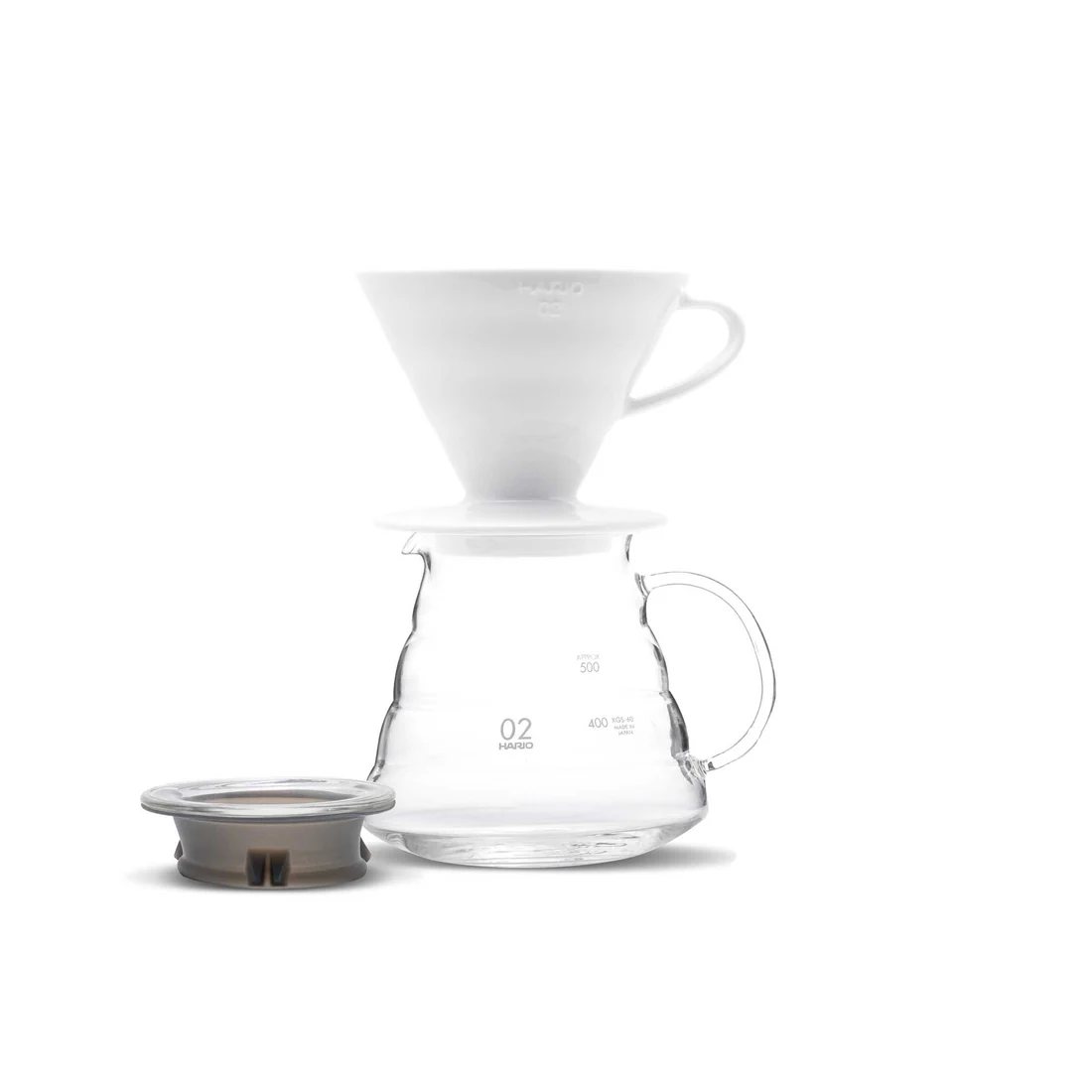
A typical pour-over setup includes:
- V60 dripper
- paper filters
- glass server or mug
- kettle
- digital scale
This small setup is enough to brew cafe-quality specialty coffee at home. We recommend a scale because measuring both coffee and water makes the recipe much easier to repeat and adjust.
The Pine Flat V60 recipe
Here is the V60 recipe we recommend for brewing Pine Flat coffee.
Coffee: 20 g
Water: 300 g
Grind: medium-fine
Temperature: 195–205°F
Bloom: pour to 50 g at 0:00, then wait until 0:30
Second pour: reach 180 g by about 1:15
Final pour: reach 300 g by about 2:00
Brew time: about 3–3½ minutes
This 1:15 coffee-to-water ratio is our balanced starting point for sweetness and clarity. Adjust the grind first if the cup needs more or less extraction.
Grind size
Grind size has a major impact on how a V60 extracts flavor.
Start with a medium-fine grind, a little finer than typical drip coffee but not nearly as fine as espresso.
If the grind is too fine, water moves through the coffee too slowly and the cup can taste bitter.
If the grind is too coarse, water passes through too quickly and the coffee can taste weak or sour.
A simple rule:
- brew finishes too quickly -> grind slightly finer
- brew takes too long -> grind slightly coarser
Step-by-step V60 brewing
- Place the paper filter in the V60 and rinse it with hot water. This removes paper flavor and warms the server.
- Grind 20 g of coffee medium-fine, add it to the filter, and gently level the coffee bed.
- At 0:00, pour evenly until the scale reaches 50 g. Swirl gently if any grounds remain dry, then let the coffee bloom until 0:30.
- From 0:30 to about 1:15, pour slowly in controlled circles until the scale reaches 180 g.
- Continue with the final pour, reaching 300 g by about 2:00.
- Allow the coffee to finish dripping. The full brew should take about 3–3½ minutes.
What the bloom does
Freshly roasted specialty coffee contains trapped gases.
When hot water first contacts the grounds, those gases begin to escape. This is why the coffee bed expands and bubbles during the bloom.
A short bloom lets gas escape and helps wet the grounds evenly before the main pours.
Adjusting flavor
One of the strengths of pour-over brewing is how easy it is to adjust.
If the coffee tastes sour or thin, grind slightly finer. If it tastes dry, harsh, or bitter, grind slightly coarser.
Keep the pour pattern and other variables consistent so you can tell what the grind change did.
Common mistakes
A few common issues can affect the final cup:
- pouring too aggressively
- not rinsing the paper filter
- changing water temperature from brew to brew
- inconsistent grind size
- stale coffee
Fixing even one of these can noticeably improve the brew. Boiling water is not automatically a mistake: boiling temperature changes with elevation, and the best temperature also depends on the coffee and your taste. Start near the recipe range and adjust deliberately.
Why freshly roasted coffee matters
Freshly roasted specialty coffee contains aromatic compounds that create sweetness, complexity, and clarity in the cup.
As coffee ages, those aromatics slowly fade.
Brewing coffee within its freshness window helps preserve the character the roast was designed to highlight.
One common myth
Many people assume brewing great specialty coffee requires complicated techniques or expensive equipment. In reality, a simple V60 setup and a consistent recipe are often enough to produce an excellent cup. Fresh coffee, a good grind, and a repeatable method make the biggest difference.
Getting started
If you're setting up pour-over brewing at home, a simple setup can make the process much easier.
We keep a few basic tools on hand — V60 brewers, filters, and servers — and are always happy to help you get started with a straightforward setup for brewing Pine Flat coffee at home.
Brewing great coffee at home doesn't require perfection.
A simple V60 recipe, fresh specialty coffee, and a little consistency are often all it takes to produce a cup that is clean, balanced, and expressive.
Brew it with freshly roasted coffee
If you'd like to try this V60 recipe with Pine Flat coffee, explore our current roasts.
Continue learning
Frequently asked questions
- What grind size should I use for a V60?
- Start with a medium-fine grind, a little finer than drip coffee but not as fine as espresso. If the cup tastes sour, grind finer. If it tastes bitter or dry, grind coarser.
- How much coffee should I use for a V60?
- Use 20 grams of coffee to 300 grams of water as a consistent starting point. That is a 1:15 ratio and matches the Pine Flat V60 recipe above.
- Do I need a gooseneck kettle for pour-over coffee?
- A gooseneck kettle helps with control, but it is not required. A steady pour, fresh coffee, and a consistent grind matter more than expensive equipment.
- Why does my V60 taste sour?
- Sour V60 coffee is often under-extracted. Try grinding a little finer, using hotter water, or slowing the pour slightly.