Washed vs Natural Coffee Processing
Before coffee is roasted, it goes through a step called processing.
Processing refers to how the coffee seed is removed from the fruit and how it is dried. This stage happens at origin, shortly after harvest, and plays a major role in how the coffee will taste.
Two of the most common methods are washed and natural processing.
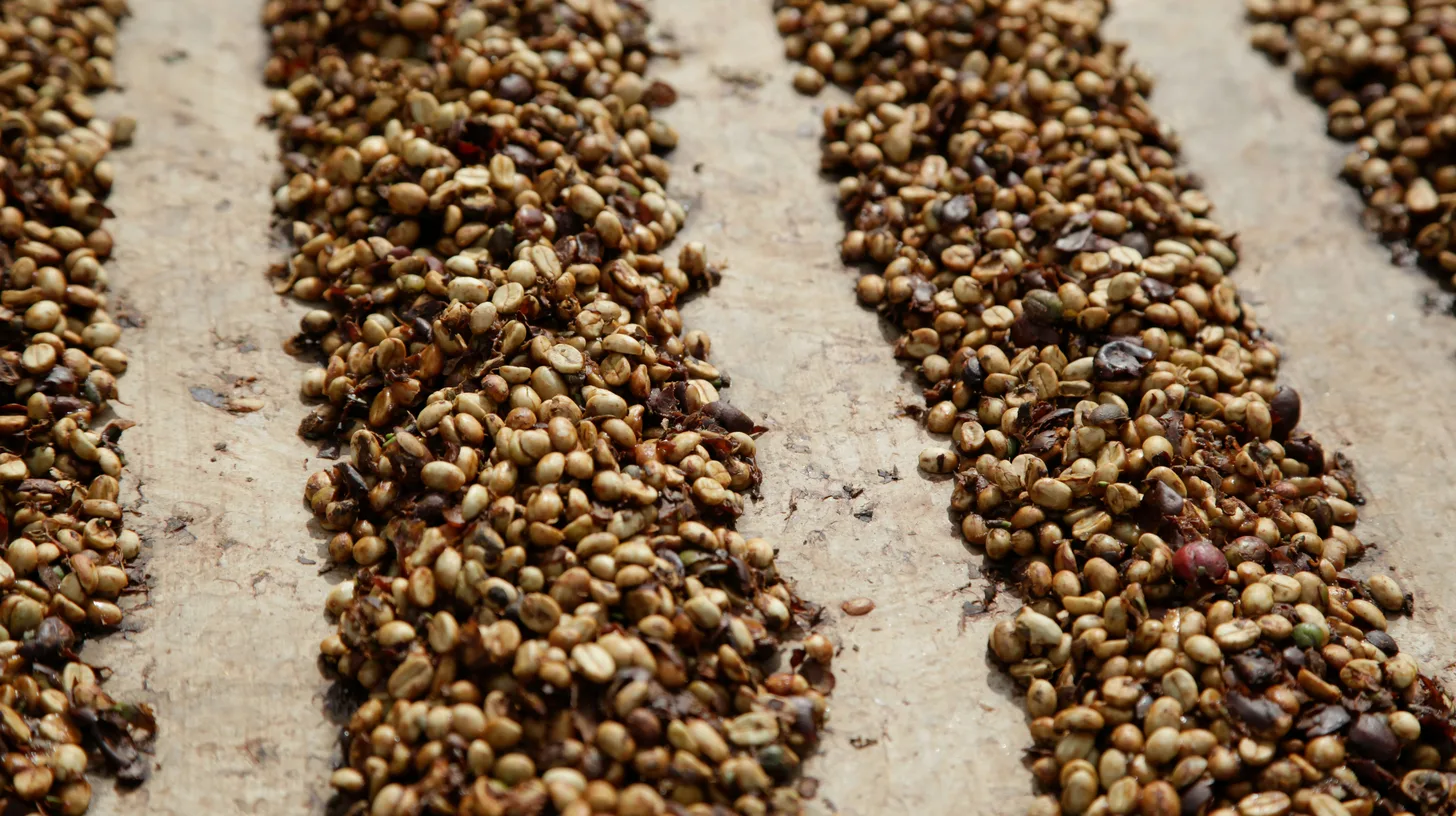
Coffee starts as a fruit
Coffee grows as a cherry on a tree. Inside that cherry is the seed we eventually roast and brew.
After harvesting, the fruit needs to be removed and the beans need to be dried. The way that is done determines the processing method.
Washed (or wet) process
In the washed process, the outer fruit is removed from the coffee cherry shortly after harvest.
The remaining mucilage - a sticky layer surrounding the seed - is then removed before the coffee is dried.
Some producers loosen it through fermentation in water, others use a dry fermentation without submerging the coffee, and some use mechanical equipment. "Washed" does not mean every coffee follows the same fermentation recipe.
This method tends to produce coffees that are:
- clean
- balanced
- bright
- well-defined in flavor
Because most of the fruit is removed early, the resulting cup often highlights the structure and clarity of the coffee itself.
Natural (or dry) process
In the natural process, the entire coffee cherry is dried with the bean still inside.
Fermentation and slow drying take place while the fruit remains around the seed. After drying, the outer layers are removed.
This method often produces coffees that are:
- fruit-forward
- heavier in body
- more intense or expressive
Because fermentation and drying happen with the fruit intact, naturals can develop more pronounced fruit character and may be less uniform if processing is not tightly controlled.
How processing affects flavor
Processing is one of the key factors that shapes how a coffee tastes, alongside origin, variety, and roasting.
A washed coffee might present as clean and structured, while a natural coffee from the same region can taste more fruit-driven and full.
Neither method is inherently better - they simply produce different flavor profiles.
One common myth
Some people assume natural processed coffees are always sweeter or higher quality. In reality, both washed and natural coffees can be exceptional when handled carefully. The outcome depends on how well the processing is managed at origin.
At Pine Flat Roastery, we often work with washed coffees because they offer clarity and balance in the cup, allowing the origin and roast profile to come through cleanly.
Understanding how coffee is processed adds another layer to how you experience it - from the farm all the way to the final brew.
Explore what shapes flavor.
Want to taste how processing shows up in the cup? Explore our current roasts.
Continue learning
Frequently asked questions
- What is washed coffee processing?
- Washed processing removes the fruit and mucilage from the seed before drying. The mucilage may be loosened through submerged or dry fermentation, or removed mechanically.
- What is natural coffee processing?
- Natural processing dries the coffee seed inside the fruit, which can create fuller body and more fruit-forward flavors.
- Is washed or natural coffee better?
- Neither is automatically better. Washed and natural coffees can both be excellent when the coffee is grown, processed, roasted, and brewed well.
- Why do natural coffees taste fruity?
- Natural processing changes the fermentation and drying environment around the seed, which can emphasize fruit-like aromas, sweetness, and body.