Why Coffee Tastes Different at Home vs Cafe
It's a common experience:
You try a coffee at a cafe and it tastes balanced, smooth, and expressive.
Then you brew the same coffee at home and it feels... a little off.
Maybe it's too bitter, too sour, or just not as clear.
The difference usually comes down to a few small variables.
Water quality
Coffee is more than 98% water, so water quality has a direct impact on flavor.
Cafes often use filtered water with controlled mineral content. This helps extract flavor more evenly and consistently.
At home, tap water can vary widely depending on location. Differences in hardness or chlorine can noticeably affect how coffee tastes.
Grind consistency
Grind size matters, but so does consistency.
Cafes typically use commercial grinders that produce very uniform particles. This allows water to extract flavor evenly.
At home, lower-quality grinders often produce a mix of fine and coarse particles, which can lead to uneven extraction - some parts over-extracted, others under-extracted.
Brew ratio and technique
Cafes measure coffee and water carefully.
A typical brew ratio might be around 1:16 (one part coffee to sixteen parts water), adjusted slightly depending on the coffee and method.
Small changes in ratio, pour technique, or brew time can shift the balance of the cup.
At home, these variables are often less controlled, which leads to more variation.
Equipment and temperature control
Cafes use equipment designed for stability.
Water temperature is kept within a narrow range, and brewing tools are designed to maintain consistent flow and extraction.
At home, small changes in temperature or pouring technique can affect how the coffee develops.
Freshness and timing
Freshness plays a role as well.
Cafes typically work with freshly roasted coffee and dial in their recipes throughout the day. They adjust grind size and brew parameters to keep the flavor consistent.
At home, it's easy to overlook how grind size, timing, and storage affect the result.
Small adjustments make a big difference
The good news is that improving coffee at home doesn't require complicated equipment.
A few small changes can go a long way:
- use fresh coffee
- grind just before brewing
- adjust grind size slightly
- measure your coffee and water
- use clean, filtered water if possible
Even small adjustments can noticeably improve the cup.
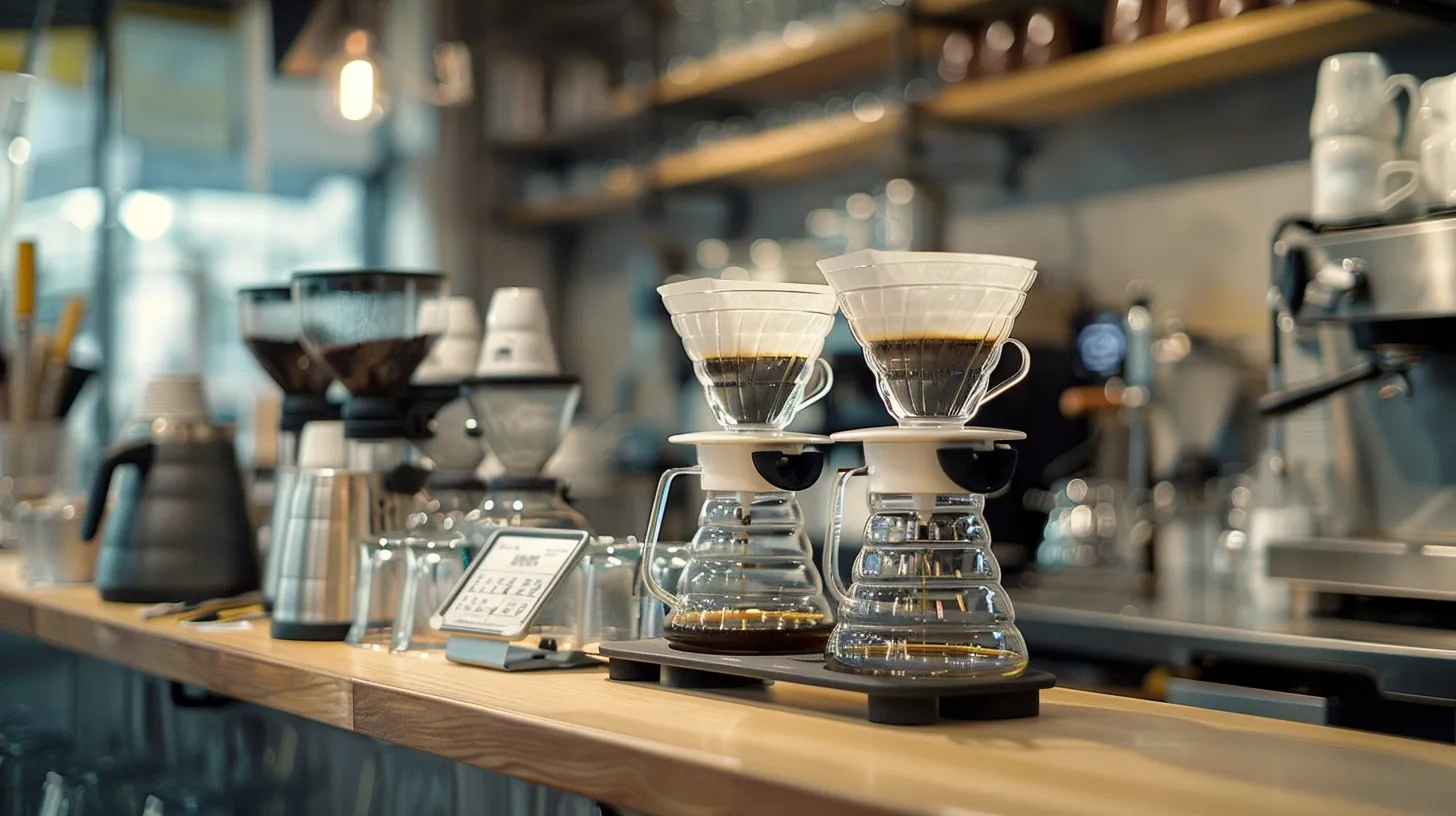
If you're starting from scratch, a simple pour-over setup can make a noticeable difference.
We keep a few basic tools on hand - V60 brewers, filters, and servers - and are always happy to help you get set up with something simple that works well at home.
One common myth
Many people assume cafes use completely different or "special" coffee. In reality, the biggest difference is usually control and consistency in how the coffee is brewed.
Brewing coffee is a simple process, but it responds to small details.
When those details are aligned - fresh coffee, proper grind, balanced extraction - the result is a cup that tastes clean, balanced, and true to the coffee itself.
Ready to brew?
Want a coffee that rewards careful brewing? Explore our current roasts.
Continue learning
Frequently asked questions
- Why does cafe coffee taste better than home coffee?
- Cafes often control water, grind size, brew ratio, temperature, and freshness more consistently than most home setups.
- How can I make better coffee at home?
- Use fresh coffee, grind just before brewing, measure your coffee and water, and adjust one variable at a time.
- Does grinder quality matter at home?
- Yes. A consistent burr grinder can make a noticeable difference because even particles extract more evenly.
- Can water make home coffee taste different?
- Yes. Water minerals and chlorine can change sweetness, bitterness, clarity, and balance in the cup.