What Is Honey Processed Coffee?
You may come across the term "honey processed" when reading about coffee.
Despite the name, no actual honey is involved.
Honey processing refers to how the coffee is handled after harvest, specifically how much of the fruit is left on the bean during drying.
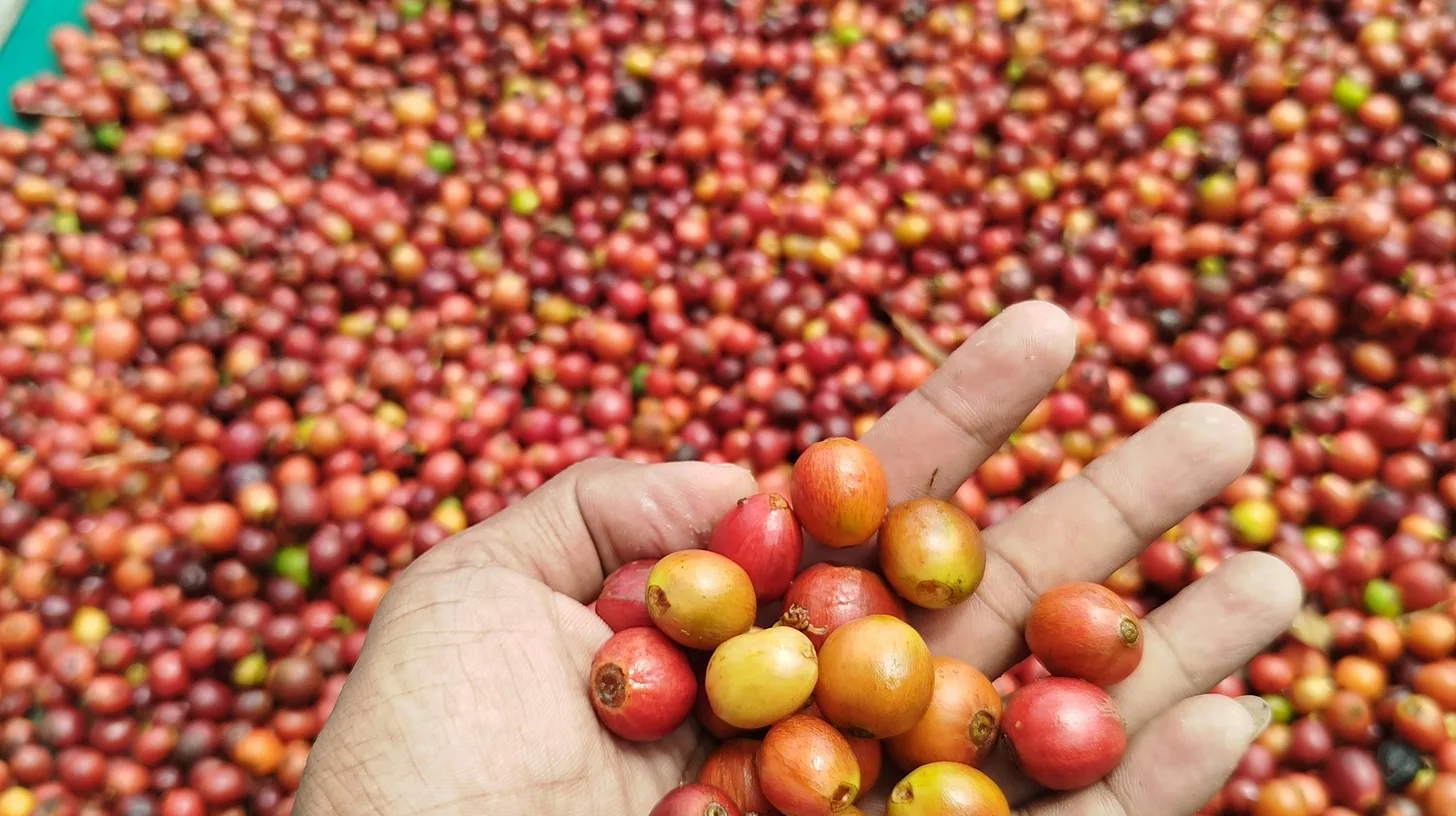
Coffee starts as a fruit
Coffee grows as a cherry, with layers surrounding the seed inside.
After harvesting, the outer skin is removed. What remains is a sticky, sugar-rich layer called mucilage.
This is the key to understanding honey processing.
How honey processing works
In a honey process, the outer skin of the coffee cherry is removed, but some or all of the mucilage is left on the bean as it dries.
The remaining mucilage changes the drying environment and fermentation activity around the seed. Careful control of time, airflow, turning, and moisture helps shape the final profile.
The name "honey" comes from the texture of the mucilage, not from added ingredients.
Between washed and natural
Honey processing sits between the two more common methods:
- Washed -> most of the fruit is removed before drying
- Natural -> the whole fruit dries around the bean
- Honey -> some fruit material remains during drying
This middle ground often produces coffees that balance clarity and sweetness.
What it tastes like
Honey processed coffees often show:
- smooth sweetness
- rounded acidity
- fuller body than washed coffees
- more clarity than naturals
The exact profile depends on how much mucilage is left and how carefully the coffee is dried.
Variations in honey processing
Not all honey processed coffees are the same.
You may see terms such as:
- white or yellow honey
- red honey
- black honey
Those colors are not a universal scale. Depending on the country or producer, they may refer to mucilage level, drying speed, shade, or other handling choices. The process details are more useful than the color name alone.
One common myth
Some people assume honey processed coffee is flavored, infused, or sweetened by fruit sugar soaking into the seed. No honey or flavoring is added. The perceived sweetness comes from the coffee itself and from how fermentation and drying shape its aromas, acids, and texture.
Honey processing is one of several ways producers shape how coffee will taste long before it is roasted.
Understanding it adds another layer to how you experience coffee - from the farm to the cup.
Explore what shapes flavor.
Want to taste how processing shapes flavor? Explore our current roasts.
Continue learning
Frequently asked questions
- What is honey processed coffee?
- Honey processed coffee is dried with some sticky fruit mucilage still on the seed. That processing environment can produce pronounced sweetness, body, and texture in the finished cup.
- Does honey processed coffee contain honey?
- No. The name comes from the sticky feel of the fruit mucilage, not from added honey.
- How does honey processing taste?
- Honey processed coffees often sit between washed and natural coffees, with more body than washed coffee and cleaner structure than many naturals.
- Is honey processed coffee better?
- Not automatically. It can be excellent when handled carefully, but quality depends on the coffee, processing, roasting, and brewing.