Strong Coffee Is Not the Same as Well-Extracted Coffee
A cup can be strong and sour. Another can be light and pleasantly sweet. Calling both problems “weak coffee” sends you toward very different adjustments.
Strength describes concentration. Extraction describes how much material the water has dissolved from the grounds. Keeping those ideas separate makes troubleshooting much less frustrating.
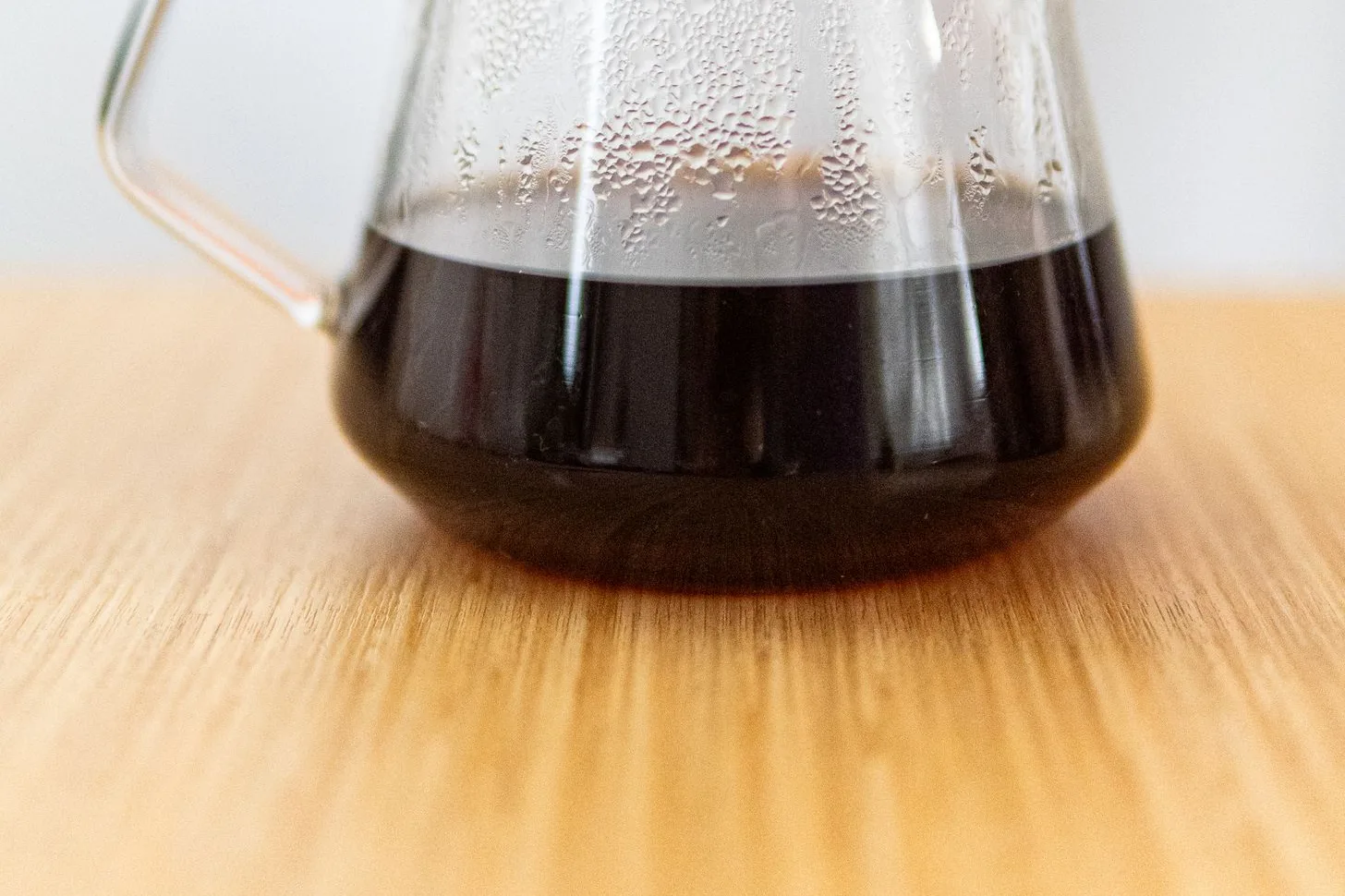
Two questions hiding in one sip
Strength asks how much dissolved coffee is present in the beverage relative to water. Extraction asks how much of the original dry coffee ended up dissolved. They are connected, but they are not interchangeable.
For filter coffee, a brew ratio describes dry coffee to the water you add. The finished beverage weighs less because grounds retain water. Espresso recipes usually describe dry dose to beverage weight instead, so read which quantities a recipe means.
Try dilution before touching the grinder
Stir a finished black coffee and split it into two cups, with 80 g in each. Add 10 g of hot drinking water to just one cup. Let both reach a similar comfortable temperature, then compare.
The diluted cup has lower concentration. You have not extracted anything more from the grounds: they are no longer there. If the diluted cup is easier to enjoy, the original may have been more concentrated than you prefer.
What the test cannot tell you
Dilution changes how flavors are perceived, so it is not a laboratory measurement of extraction. A sour or drying cup may become less intense without becoming balanced.
Use it as a practical question: do I mainly want less intensity, or do I want a different flavor balance? No refractometer is needed to make that distinction useful.
Choose the next adjustment
- Pleasant flavor, too intense: try a little dilution in the cup. Keep a note of how much water you enjoyed.
- Pleasant flavor, too light: next time try slightly more coffee for the same brewing water. Remember that a deeper bed may also change flow.
- Sharp and hollow: hold the ratio steady and test a modest grind or contact-time change appropriate to your brewer.
- Drying or rough: check for uneven wetting and excessive agitation as well as grind. Bitter flavor alone does not reveal the extraction percentage.
One common myth
People often assume that a strong cup must be over-extracted. In reality, concentration and extraction are different measurements. Coffee can be concentrated while still tasting underdeveloped, and dilution lowers strength without extracting anything else from the grounds.
Keep numbers in their place
A brewing chart can help explain why two coffees differ, but a target number cannot choose your favorite cup. Coffee, roast, filtration, and personal preference all affect what feels balanced.
Record your ratio and one short observation, such as “sweet but too intense.” That gives your next brew a clear purpose. “Bad” tells you much less, even if you have measured every variable.
Name the problem before changing the recipe. Sometimes the most useful coffee tool is a small splash of water.
Ready to brew?
Find a coffee to try in your next brew.
Continue learning
Frequently asked questions
- Does adding water fix over-extracted coffee?
- It reduces concentration and may make harshness less intense. It cannot remove compounds already dissolved or correct uneven extraction in the original brew.
- Does more coffee always improve a weak cup?
- It can increase concentration, but it also changes brewing conditions. First decide whether the cup needs more intensity or a better balance of flavors.
- Do I need a refractometer to understand strength?
- No. A measured dilution comparison is enough to explore your preference. A refractometer adds concentration data but does not decide whether you enjoy the cup.