Better Moka Pot Coffee, Without the Harsh Finish
A moka pot can make a satisfying small coffee without an espresso machine. The frustrating version is sharp at first, then bitter and sputtering at the end.
Treat the pot as its own brewer. A loose bed of coffee and attentive heat control are more useful than trying to force an espresso recipe into it.
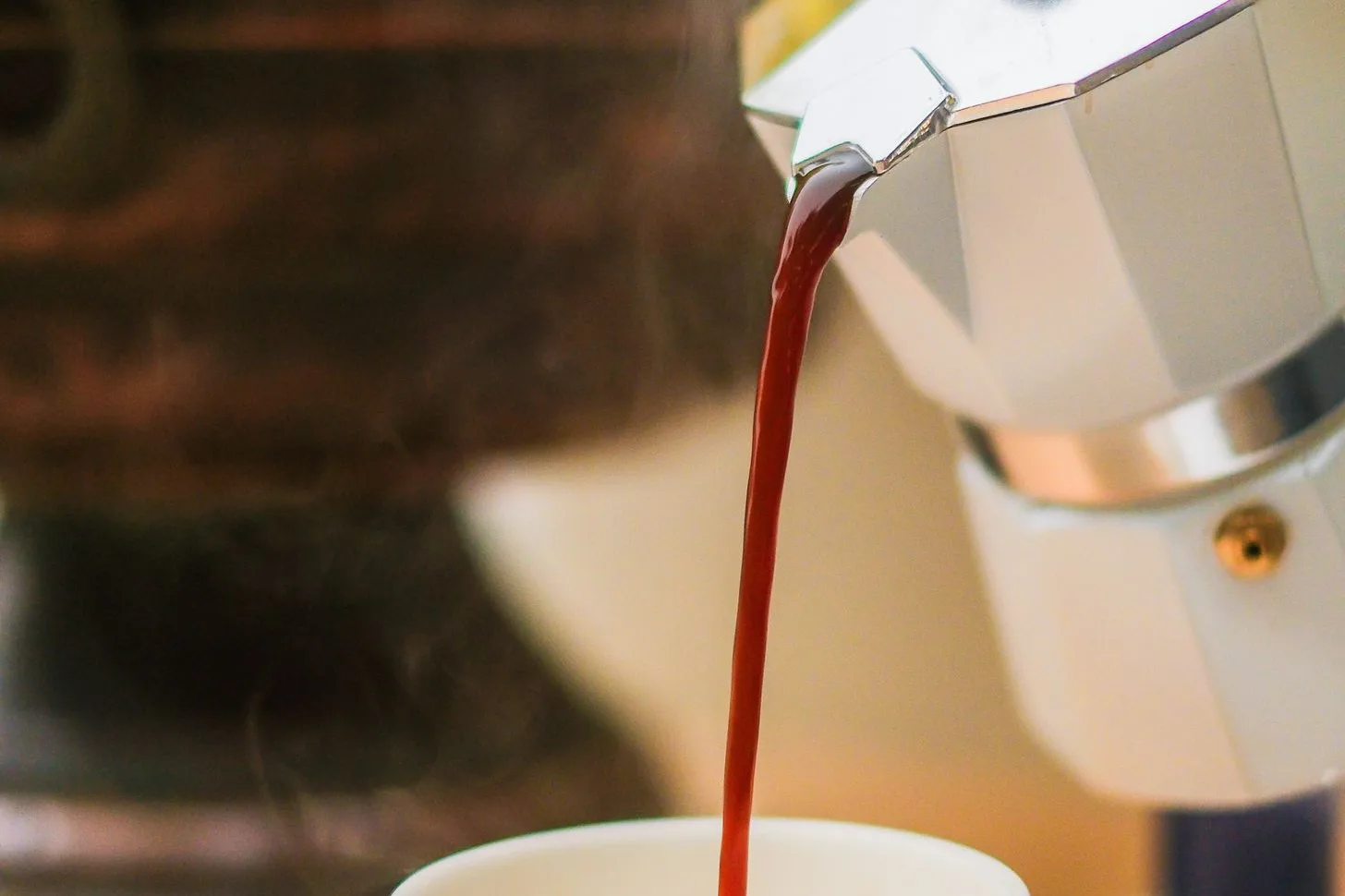
Let the pot determine the batch
Moka pots are designed around their own water chamber and basket. Start with the manufacturer's fill guidance rather than scaling a filter-coffee ratio into the pot. A “three-cup” pot means small servings, not three full mugs.
Use coffee ground finer than typical drip coffee but coarser than espresso as an initial reference. A grind label cannot account for every grinder or pot, so judge the flow and flavor too.
Set up the pot correctly
- Check that the gasket, filter, and safety valve are clean and in good condition. Use the pot only on a compatible heat source.
- Fill with water to the level specified for your model. For a standard Moka Express, keep the water below the safety valve.
- Fill the basket loosely with coffee and level the surface. Do not tamp. Clear loose grounds from the rim before assembling the pot securely.
- Use moderate heat and stay with the pot. On gas, keep the flame beneath the base rather than up the sides.
- When the upper chamber has filled and the brew begins to gurgle, remove the pot from the heat as the maker directs. Use the handle and place it on a heat-safe surface.
The ending matters
Forcing the last drops out with more heat can turn a pleasant cup into a rough one. Watch the flow so that the pot does not sit unattended after brewing.
Stir the coffee in the upper chamber before serving to mix the stronger early liquid with the later brew. Let the assembled pot cool before opening it; do not loosen a hot, pressurized pot.
Taste it at the strength you enjoy
Try a small serving on its own, then add a measured splash of hot water to another serving. Or add warm milk for a compact breakfast drink. Concentrated coffee does not have to be served undiluted.
If the brew is harsh, first check whether you used excessive heat or left the finished pot on the stove. Make the next change small. A finer grind is not automatically an improvement, especially if flow is struggling.
One common myth
Moka pots are sometimes called stovetop espresso makers, which suggests the basket should be tamped like espresso. In reality, they operate differently. A tightly packed or overly fine bed can obstruct flow; follow the pot's instructions and leave the grounds loose.
Build one repeatable routine
Keep the same fill level and basket preparation while you learn the heat setting that works on your stove. Note roughly when coffee appears and when you remove the pot, without turning those times into rigid targets.
After it cools, clean and dry the parts according to the instructions for its material. Aluminum and stainless models can have different care requirements. Old residue is not a flavor-building seasoning.
A good moka routine is attentive, not forceful. Give the coffee a clear path and the pot only the heat it needs.
Ready to brew?
Find a coffee to try in your next brew.
Continue learning
Frequently asked questions
- Should I tamp coffee in a moka pot?
- No. Fill the basket loosely and level it according to the manufacturer's instructions. Tamping can obstruct the flow in a brewer not designed for an espresso puck.
- Can I make half a pot by half-filling the basket?
- Use the fill instructions for your specific pot. Many standard models work best at their designed capacity; choose a smaller pot for reliably smaller servings.
- Why does my moka coffee taste harsh?
- Excess heat, a prolonged sputtering finish, an unsuitable grind, or stale residue can contribute. Start by controlling the heat and removing the pot promptly after brewing.