Good Coffee for a Full Table
Coffee for six people is a different task from coffee for one. The challenge is usually timing and capacity, not finding a more elaborate recipe.
With a little planning, you can serve an enjoyable pot and spend time at the table. Start with how much people will actually drink, then choose the equipment that can handle it comfortably.
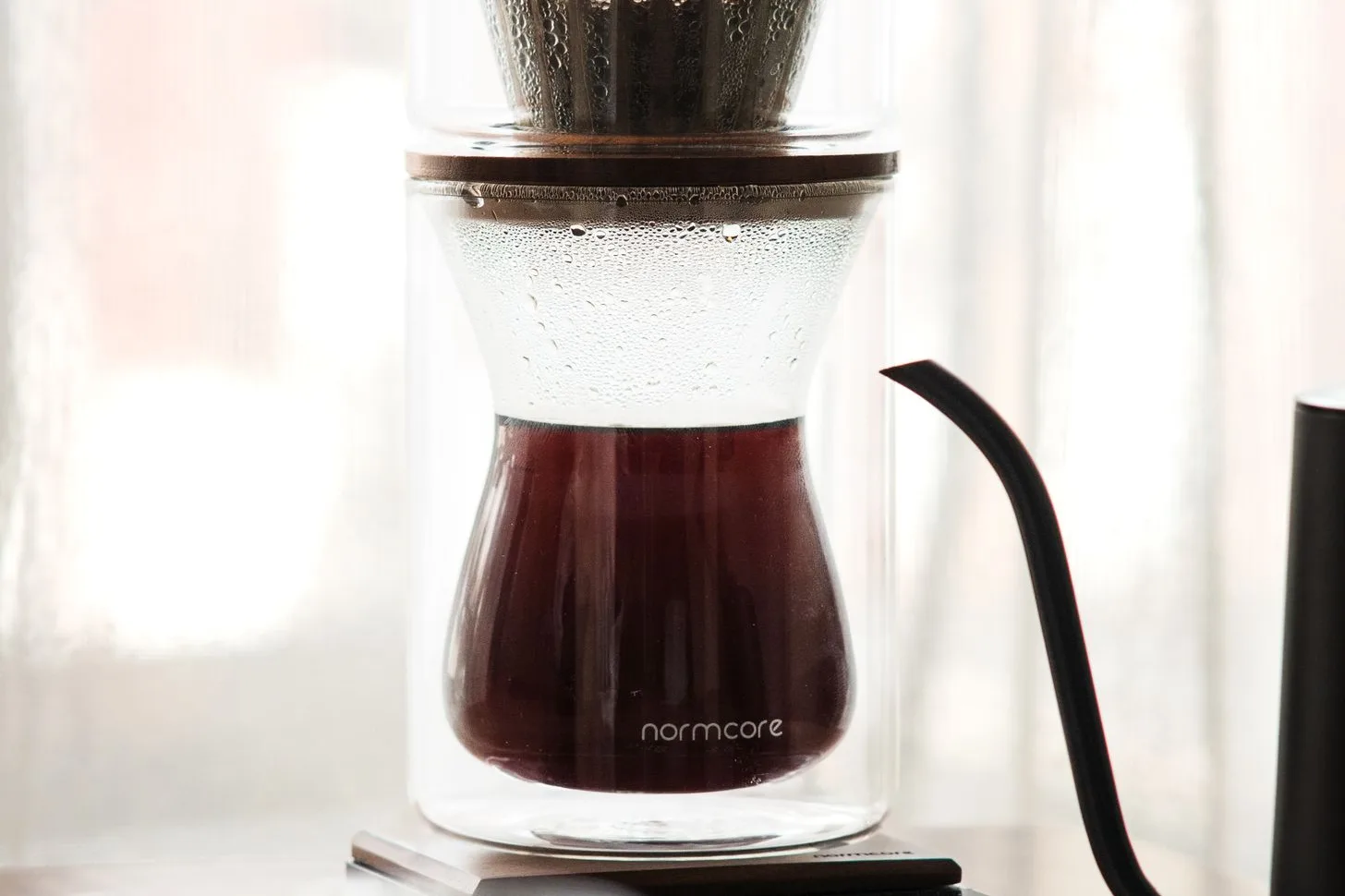
Count servings in real mugs
A coffee maker's “cup” marking may be much smaller than your household mug. Measure one typical serving rather than assuming the number on the machine matches your guests.
For example, six 150 g servings need 900 g of finished coffee. Brewing with 900 g of water produces less than that because grounds retain water. A trial run in your actual brewer is the easiest way to learn its finished output.
Scale the ratio, respect the basket
For a batch brewer designed to handle it, 60 g of coffee with 1,000 g of brewing water is a useful starting point. Use the maker's recommended grind and capacity guidance, then adjust for your taste.
The ratio scales arithmetically; water flow does not always scale with it. A larger dose makes a deeper coffee bed, and a small cone may overflow or drain poorly when asked to brew several times its normal batch.
Choose a calm serving plan
- Use a batch brewer within its rated range if you already have one. Check the basket and filter size before the day.
- With a small pour-over, brew two familiar batches rather than one oversized experiment. Combine them in a clean, prewarmed insulated server.
- With a French press, allow enough room for water and grounds, then decant after brewing. Two presses can be easier than one overfilled pot.
- Keep decaf clearly identified and use a separate vessel if you are serving both.
Do one rehearsal
A day or two ahead, brew the amount you intend to serve. Weigh the finished beverage if you have a suitable scale, and count how many of your real cups it fills.
Taste it immediately and after the time it is likely to wait. Check whether the server pours cleanly and stays pleasant to drink from. Those small details matter more during a meal than a perfect-looking coffee station.
One common myth
It is tempting to assume a good one-cup recipe becomes a good six-cup recipe just by multiplying every number. In reality, brewer capacity, bed depth, heat retention, and drainage change too. The ratio is a starting point; a small rehearsal confirms whether the larger batch works.
Make room for different preferences
Serve milk and sweetener separately, with enough space in the mugs for people who use them. A balanced coffee is a friendly starting point; guests can choose how to finish it.
Set aside the measured beans and clean equipment ahead of time, but grind close to brewing when practical. Put a simple note beside the brewer with dose and water so that someone else can help without learning your entire routine.
A successful coffee service leaves you time to enjoy the company. Know the capacity, rehearse the amount, and keep the plan simple.
Ready to brew?
Find a coffee to try in your next brew.
Continue learning
Frequently asked questions
- How much coffee should I use for one liter of brewing water?
- For a suitable batch brewer, 60 g is a useful starting point. Follow the maker's capacity guidance and adjust after tasting a trial batch.
- Will one liter of water make one liter of coffee?
- No. Grounds retain some water, so the finished beverage is smaller. Measure the actual output if you need a particular number of servings.
- Is it better to make two small batches?
- Often, if your brewer is designed for smaller doses. Two familiar batches can be more reliable than overfilling a small basket or cone.