A Small Coffee Cupping at Home
It is hard to remember exactly how last week's coffee tasted. Put two cups beside each other and the differences become much easier to describe.
A small home cupping removes much of the pouring technique from the comparison. You need two coffees, matching heat-safe cups, a scale, a timer, and spoons. This is a tasting exercise, not a professional grading session.
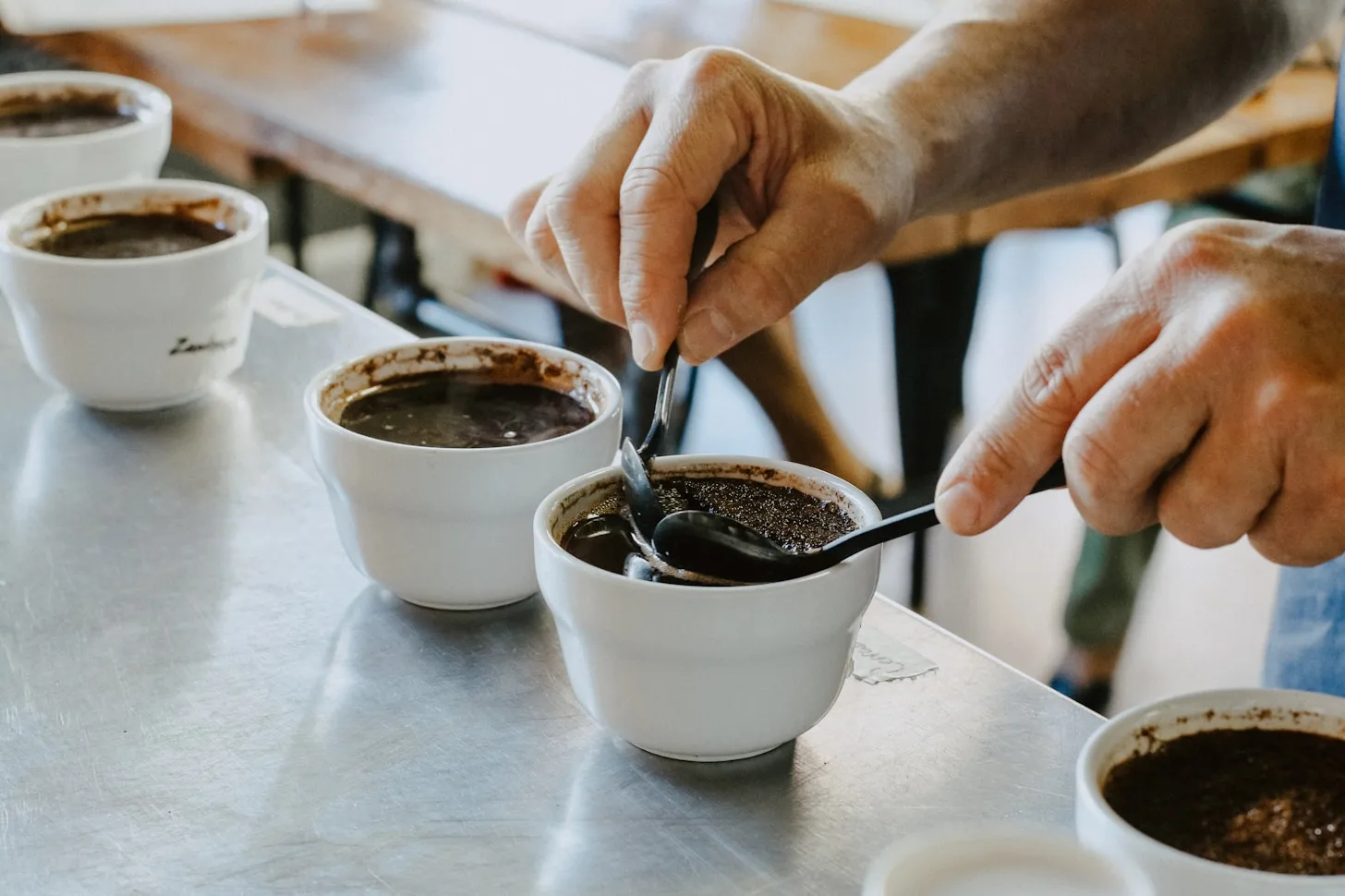
Make the cups comparable
Choose cups that comfortably hold 180 g of water plus grounds, with similar shape and material. Use 10 g of coffee per cup and 180 g of water for this home exercise.
Grind both coffees at the same medium-coarse setting immediately before brewing. Use the same water and temperature. Label the cups A and B, and write the coffee names elsewhere so that you can taste without staring at the labels.
Set up a simple steep
- Put 10 g of ground coffee into each dry cup. Smell the grounds and write a broad impression if one comes to mind.
- Start a timer as you add 180 g of hot water to each cup, wetting the grounds. Pour the second cup promptly after the first and keep track of its start time.
- At about 4 minutes for each cup, gently move a spoon through the floating crust. Smell above the cup without getting close enough to be burned by steam.
- Skim the floating foam and grounds with clean spoons. Leave the cups to settle and cool; do not stir the grounds up again.
- When comfortable to taste, take small spoonfuls from the surface. Revisit both cups as they cool rather than finishing one before starting the other.
Ask comparative questions
You do not need to identify a specific fruit. Ask which cup is brighter, which feels fuller, and which leaves a sweeter or more drying finish. “A is rounder than B” is a useful observation.
Separate description from preference. You may notice more acidity in one cup and still prefer the quieter one. Neither answer needs defending.
Keep the tasting clean and comfortable
If tasting with other people, give each person their own set of cups or use a clean transfer spoon to move coffee into personal tasting cups. Do not return a spoon from someone's mouth to a shared bowl.
Use small tastes and water between samples. Two coffees are enough for a first session. More cups can make it harder to pay attention rather than making the exercise more serious.
One common myth
A common misconception says cupping is only useful if you can name many precise flavors. In reality, a side-by-side comparison can teach you about acidity, texture, and preference with ordinary words. Describing a difference is enough to make the exercise worthwhile.
Carry one observation into your next brew
After tasting, uncover the labels and compare your notes with the bag descriptions. A missing flavor word is not a failed test; roast, recipe, temperature, and your own reference points affect the experience.
Choose one coffee to brew normally the next morning. See whether the brightness or body you noticed in the cupping still stands out through your usual filter. That connection is more useful than assigning an impressive-looking score.
Two coffees and a few honest observations can teach you more than a long list of flavor words learned by heart.
Start with freshly roasted coffee.
Find a coffee to try in your next brew.
Continue learning
Frequently asked questions
- Do I need special cupping bowls?
- No. Matching heat-safe cups with enough room for the measured water and grounds work for a home comparison. Professional grading uses more tightly controlled equipment and procedures.
- Do I have to slurp the coffee?
- No. Small, comfortable tastes are enough to begin comparing. Avoid tasting while the coffee is too hot, and focus on differences rather than a dramatic technique.
- Is this a professional coffee score?
- No. It is a simplified home tasting exercise. Professional assessment involves standardized procedures, multiple samples, and trained evaluation beyond this two-cup comparison.