Why Coffee Blooms When Brewing
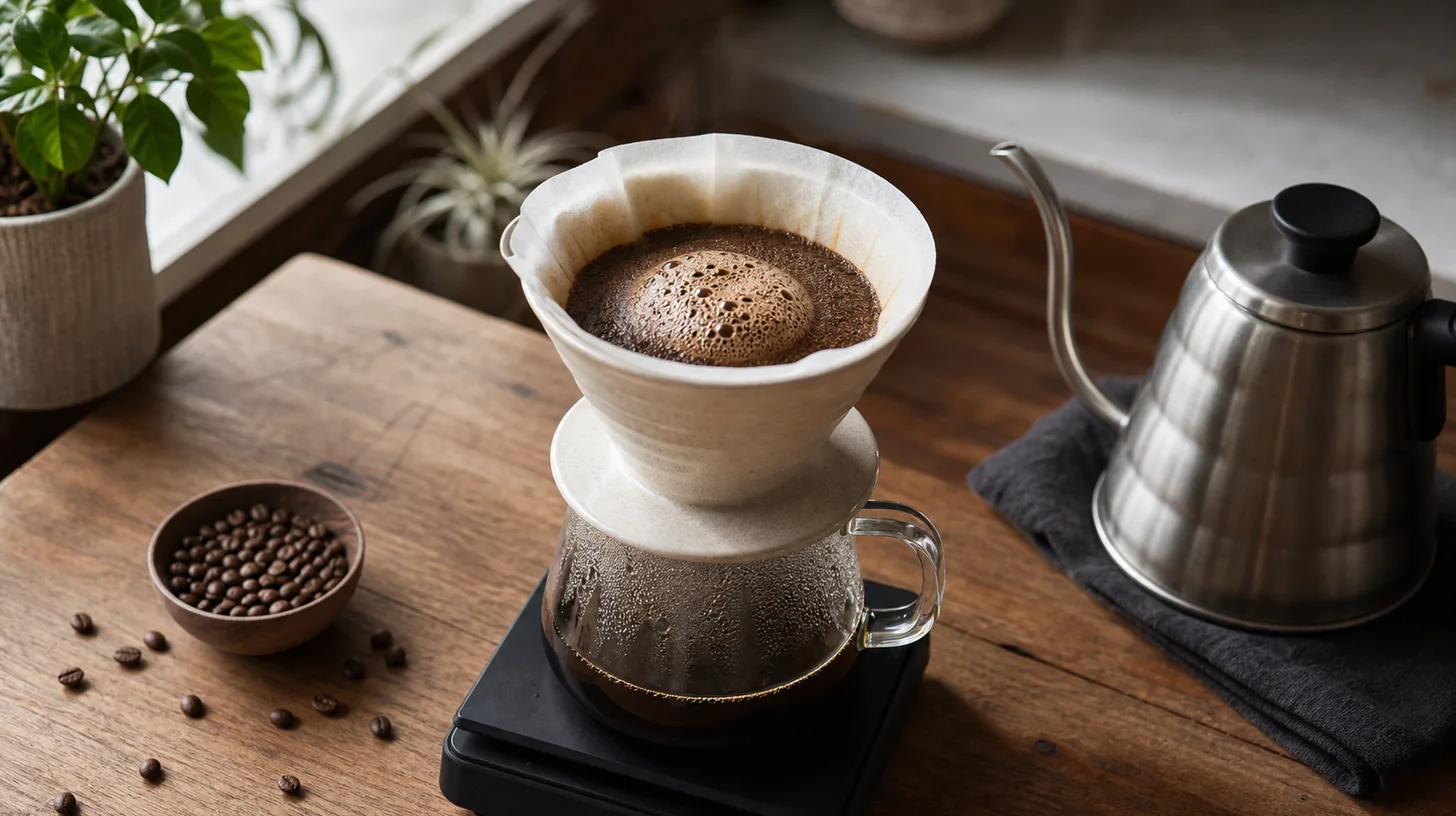
If you brew pour-over coffee, you may notice the grounds swell, bubble, and rise during the first pour.
That reaction is called the bloom.
It is one of the clearest signs that freshly roasted coffee is still changing after it leaves the roaster.
A good bloom does not guarantee a perfect cup, but it can help the rest of the brew extract more evenly.
What causes the bloom
During roasting, coffee beans develop carbon dioxide inside their cellular structure.
After roasting, that gas slowly escapes from the beans. This process is called degassing.
When hot water first hits fresh coffee grounds, some of that trapped gas releases quickly, pushing the coffee bed upward and creating bubbles on the surface.
Why the bloom matters
Carbon dioxide can interfere with extraction if it escapes too aggressively during the main brew.
The bloom gives gas a short window to leave the coffee bed before you continue pouring.
That can help water move through the grounds more evenly, which usually produces a more balanced cup.
How to bloom coffee
A simple bloom does not need to be complicated.
Start with about twice as much water as coffee by weight. For a 20 g V60 brew, use around 40-50 g of water for the bloom.
Pour slowly, wet all the grounds, and wait about 30 seconds before continuing the brew.
What if coffee does not bloom much
A small bloom does not automatically mean the coffee is bad.
Older coffee usually blooms less because much of the gas has already escaped.
Darker roasts can degas faster than lighter roasts. Grind size, water temperature, and how recently the coffee was roasted can all change what you see in the brewer.
Fresh roasting still matters
Very fresh coffee can produce a large bloom, but that does not always mean it tastes best on day one.
Coffee often becomes easier to brew after a short rest because degassing slows down and extraction becomes more predictable.
For many filter brews, a few days of rest after roasting can help sweetness and clarity settle into place.
One common myth
Many people assume a bigger bloom always means better coffee. In reality, bloom size mostly tells you about gas release. Freshness, roast level, grind size, and brewing technique all affect what you see, and the final cup matters more than the height of the bloom.
Where we stand
At Pine Flat Roastery, we roast in small batches and ship coffee soon after roasting so it reaches you fresh.
The bloom is one useful signal in the brewing process, but the goal is not a dramatic foam show. The goal is an even, sweet, balanced extraction.
Blooming is a small step, but it gives fresh coffee a better start.
If your pour-over tastes uneven, sour, or hollow, a consistent bloom is one of the first things worth checking.
Ready to brew?
If you'd like to taste how freshness changes the bloom and the cup, explore our current roasts.
Continue learning
Frequently asked questions
- What is coffee bloom?
- Coffee bloom is the bubbling and swelling that happens when hot water first hits fresh ground coffee and carbon dioxide escapes.
- How long should coffee bloom?
- A common starting point is 30 to 45 seconds for pour-over brewing, depending on the coffee and recipe.
- Does a bigger bloom mean better coffee?
- No. A bigger bloom mostly shows gas release. The final taste matters more than how dramatic the bloom looks.
- Why does old coffee not bloom much?
- Older coffee has usually released more of its carbon dioxide, so it may bloom less and taste flatter.