Beyond Grind Size: Fines and Consistency
“Medium-fine” sounds like a single size. In the catch cup, it is a mixture: larger fragments, smaller fragments, and a dust-like fraction often called fines.
Our grind-size note covers the basic adjustment. The next step is understanding why two batches with a similar average size may still behave differently.
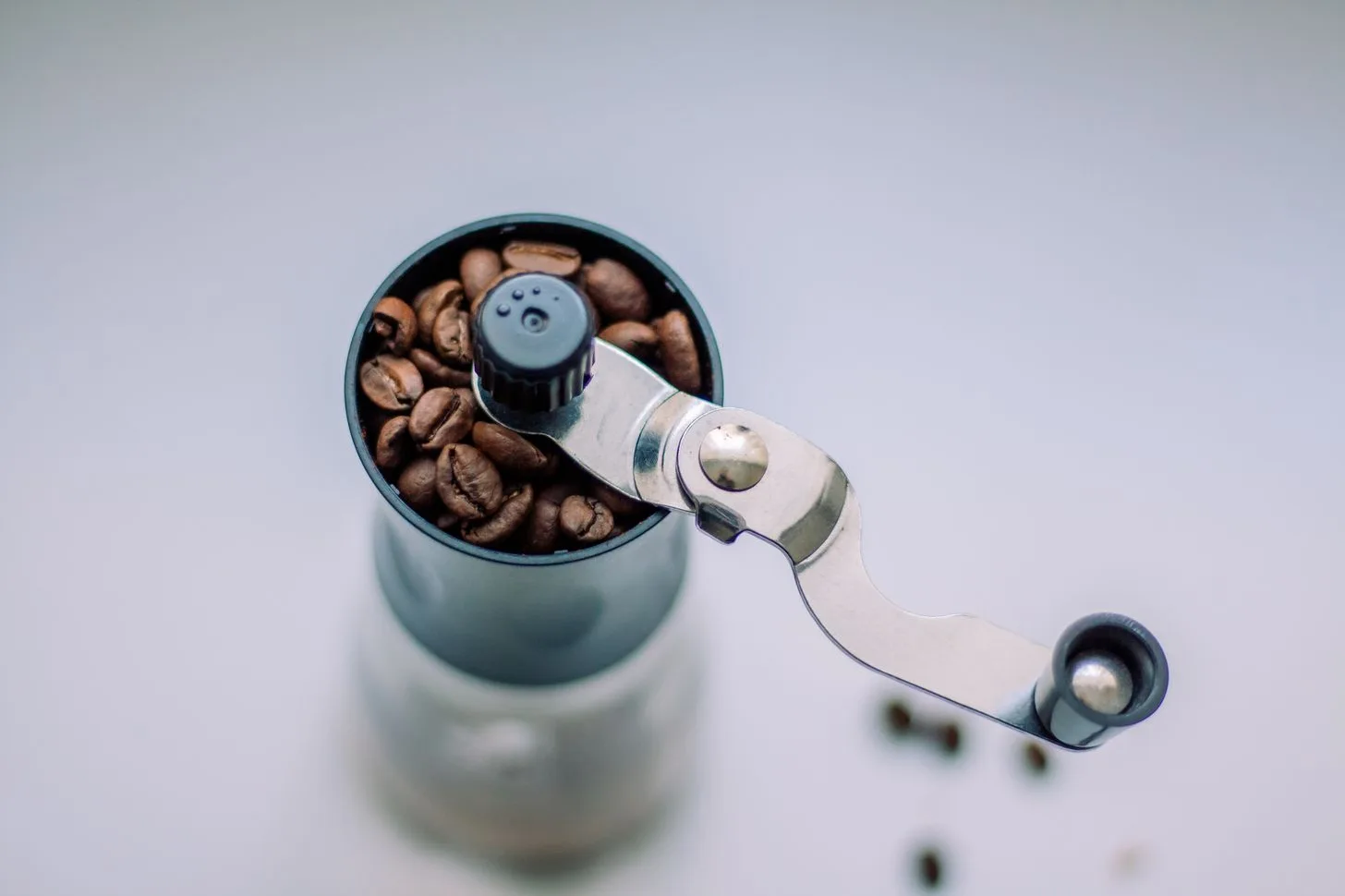
Every grinder makes a range of particles
Beans fracture rather than turning into identical little cubes. Burr grinders give you control over that process, but they still produce a spread of sizes.
Fine particles have a lot of surface area relative to their size. They also move differently through a wet coffee bed and can collect against a filter. Flavor and flow depend on the mixture, not just the largest pieces you can see.
A slow finish is a clue, not a verdict
If a pour-over flows normally and then slows dramatically, particles collecting near the filter are one possible explanation. Filter fit, coffee-bed depth, and your pouring pattern can also contribute.
Do not diagnose a failing grinder from one slow coffee. A different bean or a different filter may behave differently at the same setting. Taste the cup before deciding that the extra minute ruined it.
Check the boring things first
- Clean the grinder as its maker directs. Do not improvise with water or cleaning materials the manufacturer does not allow.
- Weigh the grounds that reach the brewer if your output seems inconsistent. Some coffee can remain inside the grinder.
- Keep your pouring and stirring routine steady. Extra agitation can change where fine particles settle.
- Use the same filter and dose for a few brews while investigating. A taller bed is another change in resistance.
Run a useful grind comparison
Choose one coffee and brew it at your usual setting. On the next brew, move one modest step coarser while keeping everything else steady. Record time and flavor, including whether the finish feels drying or pleasantly clean.
A faster brew that tastes hollow is not an improvement simply because the clock looks reassuring. A slower one that tastes sweet may be worth keeping. Repeat the preferred setting before drawing a conclusion.
One common myth
A common assumption is that a good grinder produces no fines. In reality, all coffee grinders produce a range of particle sizes. The useful question is whether that distribution and the available adjustments let you brew enjoyable coffee consistently.
When an equipment change is worth considering
A grinder deserves attention if it cannot make sufficiently small, repeatable adjustments for your method, or if it performs inconsistently after correct cleaning and setup. Those are more useful reasons than seeing a few fines on a white plate.
Before shopping, write down the actual limitation: “one click is sour, the next chokes,” or “output varies despite the same dose.” That makes it easier to seek help or evaluate an upgrade without buying a solution to the wrong problem.
Look for repeatable results before chasing perfect-looking grounds. A grinder is useful because of the coffee it helps you make.
Ready to brew?
Find a coffee to try in your next brew.
Continue learning
Frequently asked questions
- Are fines always bad for flavor?
- No. They are a normal part of ground coffee. Their amount and behavior affect extraction and flow, but removing all of them is not a universal improvement.
- Why does a new coffee drain slowly at the same setting?
- Different beans can fracture and brew differently. Filter choice, dose, and agitation also affect drainage, so the grinder setting is only one part of the explanation.
- Should I sift my grounds at home?
- It is an optional experiment, not a requirement. Sifting changes both particle distribution and usable dose, so account for discarded coffee when comparing recipes.